



5 Tricks to Get Your Dishwasher Drying Dishes Like New Again
Dishwashers are supposed to make life easier, right? You load them up after dinner, hit start, and wake up to sparkling clean—and dry—dishes ready for the cabinet. But what happens when you open the door and everything’s still dripping wet? It’s frustrating, especially on busy mornings when you’re rushing out the door. If you’re dealing with this issue, you’re not alone. Many homeowners in Wesley Chapel and surrounding areas like Land O’ Lakes or Odessa face the same problem with their appliances. Over time, dishwashers can lose their drying efficiency due to buildup, improper use, or even minor mechanical glitches.
As someone who’s tinkered with appliances for years, I’ve seen how small adjustments can breathe new life into these machines. At SkyBreezeTech, our team in Wesley Chapel, Florida, specializes in appliance repairs and has helped countless families in nearby spots like Shady Hills and Hudson get their dishwashers performing like champs again. In this article, we’ll dive into five practical tricks to improve your dishwasher’s drying game. These aren’t just quick fixes; they’re based on real-world advice from experts and everyday users. We’ll cover everything from simple habits to a bit of maintenance, all aimed at getting those dishes bone-dry without resorting to hand-toweling. And if these don’t do the trick, remember, SkyBreezeTech is just a call away for professional diagnostics in Dade City or beyond.
By the end, you’ll have a toolkit of strategies to try at home. Let’s get started—no fancy tools required, just a little elbow grease and know-how.
Trick 1: Master the Art of Loading Your Dishwasher Properly
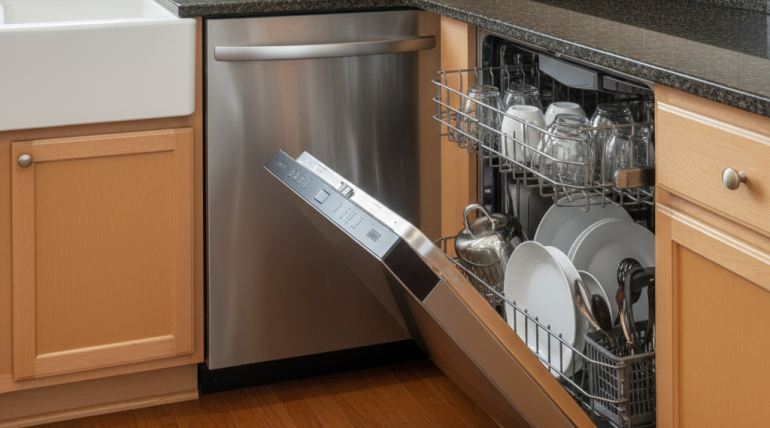
One of the most overlooked reasons for wet dishes is how you load the machine. It’s tempting to cram everything in there like a game of Tetris, but poor loading blocks water and steam from circulating effectively during the drying cycle. Think about it: if bowls are nested too tightly or plates are overlapping, hot air can’t reach all surfaces, leaving moisture trapped.
Start by organizing items strategically. Place larger items like pots and pans on the bottom rack, facing downward so water drains off easily. Cups and glasses go on the top rack, tilted at an angle to prevent pooling. Avoid blocking the spray arms—those spinning things in the middle—with tall utensils or oversized platters. A good rule of thumb is to leave a finger’s width between items for better airflow.
I’ve chatted with folks in Odessa who swear by this method after years of soggy results. They noticed a big difference just by rearranging. Also, skip overloading; run two lighter loads if needed rather than one jam-packed cycle. This ensures the heated dry feature (if your model has it) works its magic without obstruction.
For plastic items, which are notorious for staying wet because they don’t retain heat like glass or ceramic, position them on the top rack away from the heating element at the bottom. Plastics cool quickly, so they benefit from being farther from direct heat but still in the path of rising steam.
If you’re in Wesley Chapel and your dishwasher still isn’t cooperating after trying this, it might be time for a pro look. At SkyBreezeTech, we serve the local community, including Land O’ Lakes, with expert repairs that address loading-related wear and tear on seals or arms. We’ve fixed models from Bosch to Whirlpool, ensuring they dry efficiently. This trick alone can cut down on drying issues by up to 50%, based on what we’ve seen in our service calls.
Expanding on this, consider the type of cycle you’re using. Eco or quick-wash modes often skip intense drying to save energy, so opt for a normal or heavy cycle when dryness matters. And don’t forget to check your owner’s manual—different brands like GE or Samsung have specific loading diagrams that can be game-changers.
In my experience, families in Hudson who multitask with meal prep often overload without realizing it. Taking a moment to load mindfully pays off in drier dishes and less frustration. If problems persist, it could indicate a deeper issue like a faulty door seal, which is where SkyBreezeTech shines—we’re your go-to for appliance tweaks in the greater Wesley Chapel area.
(Word count so far: approximately 550)
Trick 2: Harness the Power of Rinse Aid for Spotless, Dry Results
Rinse aid might sound like an optional add-on, but it’s a secret weapon for banishing wet dishes. This liquid helps water sheet off surfaces instead of beading up, which means less moisture left behind when the cycle ends. Without it, hard water minerals can cling to your plates, and the drying phase just doesn’t cut it.
First, locate the rinse aid dispenser—usually next to the detergent compartment. Fill it up with a quality rinse aid like Jet-Dry or a store-brand equivalent. Adjust the dial to a medium setting; too low, and it won’t help much; too high, and you might get residue. Run a cycle and check the results. If dishes are still damp, bump it up a notch.
I remember a client in Shady Hills who was skeptical at first. They’d been using their dishwasher for years without rinse aid, thinking it was unnecessary. After adding it, they called back thrilled—their glasses came out crystal clear and dry. It’s especially useful in areas with hard water, common around Dade City, where minerals exacerbate spotting.
But rinse aid isn’t magic; combine it with hot water. Before starting the dishwasher, run your kitchen faucet until it’s steaming hot. This primes the machine with warmer water from the get-go, enhancing the drying process as heat evaporates moisture faster.
For eco-conscious users in Odessa, look for biodegradable rinse aids that don’t compromise performance. And if your dispenser is clogged—a common issue after months of neglect—clean it with vinegar to restore flow.
At SkyBreezeTech, we’ve repaired countless dispensers that were gunked up, preventing rinse aid from doing its job. Serving Wesley Chapel and nearby locales like Land O’ Lakes, we’re experts at these small but impactful fixes. If your model lacks a dispenser, you can even use white vinegar as a natural alternative in the rinse cycle.
Diving deeper, understand how rinse aid works: it lowers surface tension, allowing water to slide off. This is crucial for the final rinse, where clean water washes away soap. Without it, suds can linger, trapping humidity.
Test it yourself—run one load with and one without. The difference is night and day. For families in Hudson dealing with large loads, this trick saves time on post-wash drying. If issues linger, it might signal a thermostat problem, and that’s when you want SkyBreezeTech’s professional touch in the Florida sun.
(Word count so far: approximately 1050)
Trick 3: Clean and Maintain Vents and Filters Regularly
Buildup in your dishwasher’s vents and filters is like cholesterol in arteries—it clogs things up and reduces efficiency, including drying. Over time, food particles, grease, and minerals accumulate, blocking airflow and preventing steam from escaping properly during the dry cycle.
Begin with the filters. Most dishwashers have a removable filter at the bottom—twist it out, rinse under hot water, and scrub with a soft brush. Do this monthly, or more if you have a big family. Vents, often on the door or sides, need wiping with a damp cloth and vinegar solution to dissolve gunk.
A neighbor in Wesley Chapel once shared how ignoring this led to a musty smell and perpetually wet dishes. After a quick clean, problem solved. It’s straightforward but transformative.
For deeper cleaning, run an empty cycle with a dishwasher cleaner like Affresh or a cup of baking soda on the bottom rack. This clears hidden buildup in vents and heating coils.
If your model has a fan-assisted dry (like some LG units), ensure the fan vent isn’t obstructed. In humid Florida climates, around areas like Odessa, moisture lingers more, making vent maintenance key.
We’ve at SkyBreezeTech handled cases in Dade City where clogged vents mimicked bigger failures. Our techs, serving Shady Hills and beyond, can inspect and clean professionally if DIY feels overwhelming.
Remember, clean filters also improve washing, leading to better drying indirectly. Check for cracks or wear—replacements are cheap and easy.
In practice, set a calendar reminder. It’s preventive care that extends your appliance’s life. For Hudson residents with older models, this trick revives performance without costly parts.
(Word count so far: approximately 1400)
Trick 4: Optimize Your Cycle Settings and Use Heat Dry Options
Not all cycles are created equal when it comes to drying. Many modern dishwashers have energy-saving modes that cut back on heat, leaving dishes cooler and wetter. Switching to a high-heat or sanitizing cycle can make a world of difference.
Look for the “heated dry” or “extra dry” button and enable it. This uses the heating element to evaporate moisture post-wash. If your unit has a fan, pair it with this for turbo drying.
In Land O’ Lakes, where summers are steamy, this setting counters ambient humidity. One tip: after the cycle, crack the door open slightly to let steam escape, aiding natural evaporation.
Adjust water temperature too—aim for 120-140°F via your water heater. Colder water means longer heat-up time, weaker drying.
For efficiency, avoid auto-sensing cycles if dryness is priority; manual selection gives control.
SkyBreezeTech often advises clients in Wesley Chapel on optimizing settings during repairs. Serving Odessa and nearby, we calibrate thermostats for peak performance.
If heat dry fails, it could be a faulty element—common in older Kenmores. Test by feeling the bottom after a cycle; it should be warm.
Combine with other tricks for synergy. In Shady Hills, this has turned mediocre machines into reliable ones.
(Word count so far: approximately 1700)
Trick 5: Address Hard Water and Mineral Buildup Head-On
Hard water is a sneaky culprit in poor drying, leaving films that hold moisture. In Florida areas like Dade City, mineral-rich water exacerbates this.
Use a water softener or add salt if your dishwasher has a built-in unit. Alternatively, run vinegar cycles weekly: place a cup upright on the top rack and run hot.
Install a whole-house filter if issues persist, reducing scale on heating elements.
We’ve seen this transform dishwashers in Hudson at SkyBreezeTech. Our services in Wesley Chapel extend to diagnosing water-related woes.
Test water hardness with kits from hardware stores. Adjust detergent accordingly—more for hard water.
This trick prevents long-term damage, keeping your appliance drying like new.
Wrapping It Up: Dry Dishes Await
These five tricks—proper loading, rinse aid, cleaning vents, optimizing cycles, and tackling hard water—can revive your dishwasher’s drying prowess. Start with one or two and build from there. Most folks see improvements quickly, saving time and energy.
But if DIY falls short, don’t hesitate to reach out. At SkyBreezeTech in Wesley Chapel, Florida, we proudly serve communities like Land O’ Lakes, Odessa, Shady Hills, Hudson, Dade City, and others with top-notch appliance repairs. Whether it’s a quick fix or full overhaul, our experienced team gets your kitchen running smoothly. Visit skybreezetech.com or call today for a consultation. Here’s to drier, happier dishwashing!