Refrigerator Door Won’t Close or Seal? 8 Causes and Easy Fixes
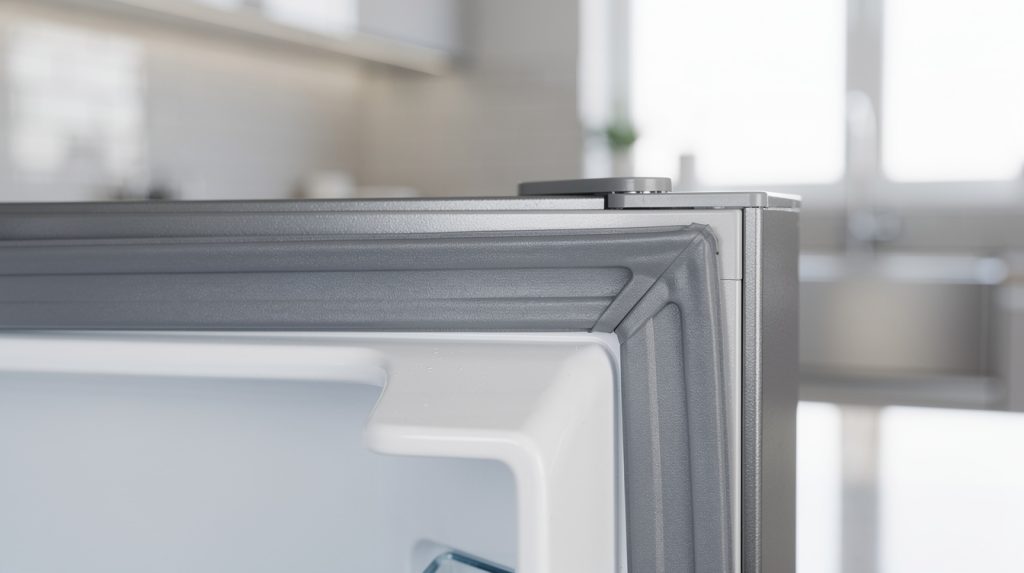
You close the refrigerator door, walk away, and ten minutes later notice it’s drifted open an inch. Or maybe it closes, but you’ve started finding condensation beading along the edge, a freezer that frosts up every few weeks, and a fridge that hums constantly while your butter stays suspiciously soft. A refrigerator door that won’t close properly — or closes but won’t seal — is one of those problems homeowners learn to live with, nudging the door shut with a hip on every pass through the kitchen. Please don’t live with it. It’s making your fridge work brutally hard, spoiling food faster, and in most cases the fix is simple, cheap, or both.
Here are the eight reasons refrigerator doors stop closing and sealing, in the order you should check them.
First, Figure Out Which Problem You Have
Door problems come in two flavors, and the diagnosis differs:
- The door physically won’t stay closed — it bounces back, drifts open, or needs a shove. Usually a leveling, hinge, or obstruction issue.
- The door closes but doesn’t seal — you can feel cold air escaping, see condensation or frost, or the dollar bill test fails. Usually a gasket issue.
Quick test for the second kind: close the door on a dollar bill and tug. Do it at the top, middle, bottom, and both corners. Anywhere the bill slides out freely, the seal is failing at that spot. (A flashlight works too: put a lit flashlight inside facing the door at night, kill the kitchen lights, and look for a glow escaping around the edges.)
The 8 Causes, From Most to Least Common
1. Something Inside Is Blocking the Door
Start embarrassingly simple. A crisper drawer that isn’t fully seated, a shelf askew, the ice maker arm, a pizza box, a tall bottle in the wrong door bin, a bag of frozen peas slumped against the freezer door — any of these will hold a door open a half inch without being obvious. Empty the door bins and check that every drawer and shelf sits fully home. While you’re in there, make sure the door bins themselves aren’t cracked or sagging; an overloaded bin can flex enough to catch the cabinet frame.
2. The Refrigerator Isn’t Tilted Back
Refrigerator doors are designed to swing closed on their own — but only if the unit leans very slightly backward. The front leveling legs should be set so the front of the fridge sits about a quarter to half inch higher than the back. If your fridge was moved recently (new flooring, kitchen cleaning, a move), this is overwhelmingly the likely cause of a door that drifts open.
The fix: locate the leveling legs (behind the base grille at the front), and turn them to raise the front until a door opened to 45 degrees swings gently closed by itself. Check side-to-side level with a bubble level too — a fridge leaning toward one side puts constant strain on hinges and can make one door sag against the other on French door models.
3. A Worn, Warped, or Dirty Door Gasket
The gasket is the most common culprit for sealing problems. Three failure modes, three fixes:
- Dirty: sticky residue (syrup, jam, the ghost of spilled juice) holds the gasket open in spots, and grime keeps the magnetic strip from snapping flush. Wash the entire gasket with warm soapy water, dry it, and rub a thin film of food-safe silicone grease (or even petroleum jelly) along the contact face. This alone fixes a surprising share of seal complaints — and it keeps the rubber supple in Florida’s constant humidity.
- Warped or flattened: sections that have lost their spring sometimes recover with heat — warm the deformed section with a hairdryer on low and gently reshape it, then let it cool against a closed door.
- Cracked, torn, or hardened: replace it. Gaskets are model-specific ($50–$100), and installation is DIY-friendly on most models: the new gasket presses or screws into a channel behind the old one’s lip. Soak it in warm water first so it goes on pliable, and expect a few days before it fully seats and seals.
A leaking gasket isn’t cosmetic: it’s the direct cause of the frost buildup, constant running, and condensation problems we cover in our guides to a refrigerator that runs without cooling and common refrigerator mistakes.
4. Sagging or Loose Hinges
Doors are heavy — especially door-in-door and French door designs with loaded bins — and years of swinging wear on the hinges. A sagging door sits crooked in its frame, sealing at the top but gapping at the bottom (or vice versa). Look at the door’s alignment with the cabinet: the gaps should be even all the way around. If the door visibly droops, the upper hinge bolts often just need tightening (pop off the plastic hinge cover on top). Some models have an adjustable middle or lower hinge with shims or a cam that raises a sagging door back into square. If a hinge is actually bent or its bushing has worn through, replacement parts are inexpensive but the door has to come off — a two-person job worth doing carefully or leaving to a pro.
5. The Door Closer Cam Is Worn
Most refrigerator doors ride on a pair of plastic cams (one on the door, one on the hinge pin) that act as a self-closing mechanism — they convert the door’s weight into closing force for the last few inches of swing. When these cams wear flat or crack, the door loses its self-closing behavior and will rest wherever you leave it. Symptoms: a door that stays open at any angle, or grinds and lifts oddly as it closes. The parts cost $10–$20; replacing them means lifting the door off its lower hinge pin, swapping the cams, and setting it back. Very fixable.
6. Frost or Ice in the Door Frame
In freezers especially, ice can build along the frame or under the gasket lip, physically holding the door off its seal — and every day it’s held open, more humid air enters and makes more ice. If you see frost ridges along the frame, defrost the area (a warm wet towel works for small buildup), find out why moisture got in to begin with — usually the gasket or door habits — and fix that too. Heavy recurring frost has its own list of causes worth ruling out.
7. Overloaded or Misaligned Door Bins (French Door Quirks)
French door models add their own complications: the flipper mullion — the hinged vertical strip on the left door that the right door seals against — must rotate into position as the door closes. If it’s stuck, cold, or its little guide is broken, the doors won’t seal in the middle, and you’ll feel cold air at the center seam. Make sure the mullion flips freely and sits flush when both doors close; replacement assemblies are available by model if it’s cracked. Also: heavy gallon jugs in both door bins can flex the doors enough to gap the center seal on some models. Try redistributing the weight and re-testing.
8. The Cabinet Itself Has Shifted
Least common: the floor moved, not the fridge. Settling foundations, soft spots in older flooring, or a fridge half-on half-off a tile transition can rack the cabinet just enough to throw doors out of square. If leveling legs can’t compensate and door alignment looks twisted rather than sagged, check what the unit is standing on before blaming the appliance.
What a Bad Door Seal Actually Costs You
A door that seals poorly forces the compressor to run far more than designed — often 20–50 percent more — which shows up as a higher electric bill, food that spoils early, frost where it shouldn’t be, and an early death for the hardest-working component in the machine. It’s the same compounding-damage story we tell in our guide to keeping your refrigerator running like new: small frictions, ignored for years, become the expensive failures. A $60 gasket now beats a $700 compressor later, every single time.
The 15-Minute Door Health Check
- Dollar bill test at five points on every door
- Wash and grease the gaskets
- Check door swing: does a half-open door close itself?
- Eyeball the door gaps for even alignment
- Confirm drawers, bins, and the mullion (if you have one) sit properly
- Clear any frost from frames and gasket lips
Do this twice a year — say, when you clean the condenser coils — and door problems will never sneak up on you.
When to Hand It Off
If the gasket is good, the unit is level, the hinges are tight, and the door still won’t close or seal — or if the door needs to come off for hinge or cam work and you’d rather not wrestle an 80-pound slab of steel and glass — that’s a quick visit for us. SkyBreeze Appliance Repair fixes door alignment, gaskets, hinges, and the cooling problems bad seals leave behind, for every major brand across Tampa, Wesley Chapel, Lutz, Land O’ Lakes, Shady Hills, Hudson, Dade City, Zephyrhills, and The Villages.
A refrigerator door should close itself with a soft, confident thump and seal like it means it. If yours has gotten lazy, now you know exactly where to look.