Why Your Dishwasher Isn’t Cleaning Dishes Properly (And How to Fix It)
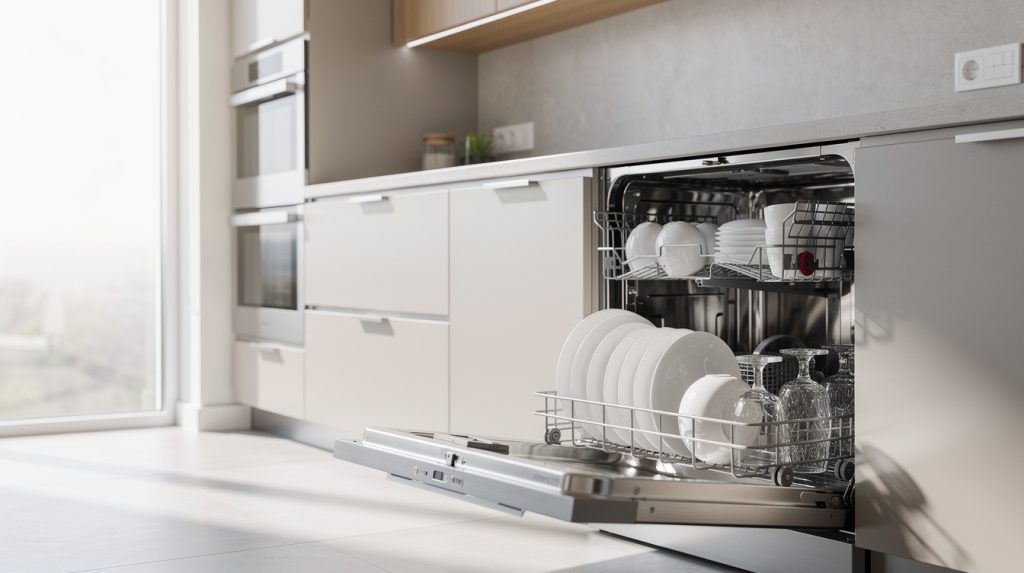
You open the dishwasher after a full cycle, expecting clean dishes, and find last night’s pasta still stuck to your bowls. Or your glasses have a hazy film, and your silverware looks like it went through the mud rather than a wash cycle. A dishwasher that isn’t cleaning properly is one of the most frustrating appliance problems — especially when you’re relying on it after a big family dinner.
This is something we hear about constantly from homeowners in Tampa, Wesley Chapel, Lutz, Land O’ Lakes, and throughout Central Florida. The causes range from simple user habits to genuine mechanical failures, and knowing which one applies to your situation can save you from an unnecessary service call.
1. Clogged or Dirty Spray Arms
The spray arms are the rotating plastic arms (usually at the bottom and sometimes the middle and top of the tub) that shoot water onto your dishes during the wash cycle. Each arm has small holes that can get clogged with food particles, mineral deposits, or hard water scale over time.
When the spray holes are blocked, water pressure drops and coverage becomes uneven. The result: dishes on certain parts of the rack come out clean, while others don’t get properly washed at all.
To check: remove the spray arms (they usually twist or clip off without tools) and hold them up to the light. If the holes look blocked, use a toothpick or small wire to clear each one. Rinse the arms thoroughly before reinstalling. This five-minute fix often solves poor dishwasher performance completely.
2. A Dirty or Clogged Filter
Most modern dishwashers have a filter at the bottom of the tub that catches food particles during the wash cycle. If this filter doesn’t get cleaned regularly, it becomes clogged — and a clogged filter means dirty water circulates back onto your dishes instead of draining away properly.
Cleaning the filter is one of those maintenance tasks that doesn’t get enough attention. Locate the filter (usually a cylindrical piece under the lower spray arm), twist or lift it out, and rinse it under warm water, using a soft brush to remove any stubborn debris. Aim to clean it once a month, or more often if you run the dishwasher daily or frequently wash dishes without pre-rinsing.
3. Overloading the Dishwasher
We’ve all been there — cramming in just a few more dishes to avoid running a second load. But overloading the dishwasher blocks the spray arms from rotating freely and prevents water from reaching all the surfaces. Dishes that are nested together, stacked improperly, or blocking the spray arm path will almost always come out dirty.
The fix is simple: load fewer dishes and make sure nothing is blocking the rotation of the spray arms. Plates should be angled toward the center, bowls should face down, and tall items shouldn’t obstruct the upper spray arm. Check your owner’s manual for loading diagrams — they’re more helpful than people realize.
4. Wrong Detergent or Incorrect Amount
Not all dishwasher detergents are created equal. Cheap powders can leave residue. Using too little detergent results in undercleaning. Using too much — especially liquid detergent — can leave a soapy film. And using the wrong product (like regular dish soap) is a disaster that creates mountains of suds and can flood your kitchen.
For best results, use high-quality dishwasher tabs or pods. They’re pre-measured, dissolve reliably, and typically outperform powders and gels in cleaning ability. If you have hard water (which is common in many parts of Florida), using a rinse aid is also essential — it prevents mineral deposits from clouding glasses and leaving film on dishes. Hard water is a significant issue in areas like Zephyrhills and parts of Wesley Chapel.
5. Low Water Temperature
Dishwashers need hot water to dissolve grease and detergent effectively. If your home’s water heater is set too low — below 120°F — or if there’s a long distance between the water heater and the dishwasher, the water entering the machine might not be hot enough to clean properly.
You can test this by running the hot water in your kitchen sink for 30–60 seconds before starting the dishwasher. This ensures the supply line is filled with hot water before the cycle begins. If your water heater is set below 120°F, consider raising it slightly — though be mindful of scalding risks if you have young children in the household.
Some dishwashers have a built-in heating element that boosts water temperature during the wash cycle. If your dishwasher has this feature and the heater element fails, the machine will struggle to clean effectively regardless of the inlet water temperature.
6. A Failing Wash Pump or Motor
The wash pump and motor are responsible for circulating water through the spray arms at high pressure. If the pump wears out, bearings fail, or the motor loses strength, water circulation becomes weak and dishes won’t get clean. You might notice that the spray arms aren’t spinning as forcefully as they used to, or that the dishwasher sounds different during the wash cycle.
This is a repair that requires professional diagnosis. A weak pump can sometimes be confirmed by checking the water pressure during a cycle, but motor replacement is typically a job for a trained technician. If you’re noticing gradually declining cleaning performance over several months, pump wear is worth investigating.
7. Hard Water Buildup Inside the Machine
Florida’s water is notoriously hard in many areas, and mineral buildup inside the dishwasher’s spray arms, pump, and interior walls can significantly reduce cleaning performance over time. Hard water deposits build up gradually, restricting water flow and leaving a chalky residue on dishes and the interior.
A deep cleaning cycle using a dishwasher cleaner (like Affresh or a citric acid-based cleaner) can dissolve mineral buildup and restore performance. Run an empty dishwasher with the cleaner on the hottest setting. For persistent scale, a second cleaning cycle may be needed. Doing this once a month can prevent the problem from getting out of hand.
You may also notice this connects to the white film problem — if your dishwasher is leaving a chalky residue on dishes, our guide on dishwasher white film on glasses covers that specific issue in detail.
A Note on Combination Issues
Poor cleaning performance is often the result of multiple small problems working together. A slightly clogged filter combined with incorrect loading and hard water can produce very dirty dishes even though no single issue is severe. Address all the factors systematically rather than looking for one smoking gun.
Also consider whether other dishwasher problems are present. If your dishes aren’t coming clean and they’re not drying properly, our dishwasher drying tips article covers the drying side of the equation. And if there’s standing water at the end of the cycle, check our guide on dishwasher not draining.
Maintenance Checklist for Better Dishwasher Cleaning
- Clean the filter monthly (or after every 30 cycles)
- Inspect and clear spray arm holes every few months
- Use quality detergent tablets and rinse aid
- Don’t overload — leave space between dishes
- Run hot water at the sink before starting a cycle
- Run a dishwasher cleaner through an empty cycle monthly
- Check water temperature — should be at least 120°F
Florida Hard Water: A Dishwasher’s Biggest Enemy
Florida sits in one of the hardest-water regions of the United States. In areas like Zephyrhills, Dade City, Wesley Chapel, and parts of Tampa, water hardness levels can be quite high — and hard water is one of the most common reasons dishwashers underperform.
Hard water contains elevated levels of calcium and magnesium minerals. When hot water evaporates during the dishwasher’s wash and dry cycles, these minerals get left behind on dishes, glassware, and the interior of the machine itself. Over time:
- Spray arm holes clog with mineral deposits, reducing water pressure
- The heating element develops scale buildup that reduces its effectiveness
- The interior walls and tub accumulate a chalky film that recirculates onto dishes
- The pump and motor work harder, shortening their lifespan
The solution has two parts: use rinse aid consistently (it breaks the surface tension of water and helps it sheet off dishes rather than bead and leave deposits) and run a monthly dishwasher cleaning cycle using a citric acid-based cleaner or a product like Lemi Shine. If you’ve moved from a low-mineral-content water area, you may need to adjust detergent quantities and cleaning frequency significantly.
How to Read Your Dishwasher’s Error Codes
Many modern dishwashers display error codes when something goes wrong. If your dishwasher isn’t cleaning properly and is also showing a code on its display, that code can point directly to the failing component. Common cleaning-related error codes include codes for:
- Low water pressure or water inlet issues
- Wash motor or pump errors
- Heating element failures
- Sensor malfunctions affecting cycle timing
Our appliance error code cheat sheet covers common codes for major brands including Bosch, Samsung, LG, Whirlpool, and GE. Cross-reference your code there before calling for service — in some cases, a simple reset or quick fix will clear the code and restore normal operation.
Finding the Filter on Your Specific Dishwasher
One of the most common maintenance oversights is simply not knowing where the filter is. Here’s how to find it on the most common brands:
- Bosch: The filter assembly is at the bottom center of the tub, covered by the lower spray arm. Remove the spray arm (twist counterclockwise) then lift out the cylindrical fine filter and coarse mesh filter beneath it.
- Samsung and LG: Similar to Bosch — bottom center of the tub. Many Samsung models have a two-piece filter: a cylindrical micro-mesh insert and a flat mesh plate beneath it.
- Whirlpool and Maytag: Older models may have a self-cleaning filter with a built-in grinder (no manual cleaning needed), but newer models have manual filters like Bosch. Check your model number to confirm.
- GE and Frigidaire: Similar placement — bottom of tub, under lower spray arm. On some Frigidaire models, the filter is located near the back of the tub bottom.
Is Your Water Hot Enough? Testing Your Home Water Heater
Many homeowners don’t realize that their water heater temperature significantly affects dishwasher performance. Florida households often reduce water heater temperatures to save energy in our warm climate — which is reasonable, but going below 110–120°F will noticeably reduce how well the dishwasher cleans.
To test your water temperature: run the kitchen sink hot tap for 60 seconds to clear the supply line, then hold a cooking thermometer under the stream. If it reads below 110°F, consider raising your water heater setting slightly, or switch to a dishwasher with a strong internal heating element that can boost temperature regardless of inlet water temperature.
When to Call a Professional
If you’ve worked through all seven causes above and your dishwasher still isn’t cleaning properly, the problem is likely mechanical — a failing pump, motor, or wash system component. These aren’t DIY repairs for most homeowners, but they’re well within our wheelhouse at SkyBreeze Appliance Repair.
We serve homeowners throughout the Tampa Bay area — from Hudson and Shady Hills to Dade City and The Villages. Our technicians carry parts for all major brands and can diagnose cleaning performance issues quickly and accurately. A dirty dishwasher doesn’t have to mean a hand-washing marathon — let us get it back to doing its job.