Dryer Squeaking or Making Noise? Here’s What’s Causing It
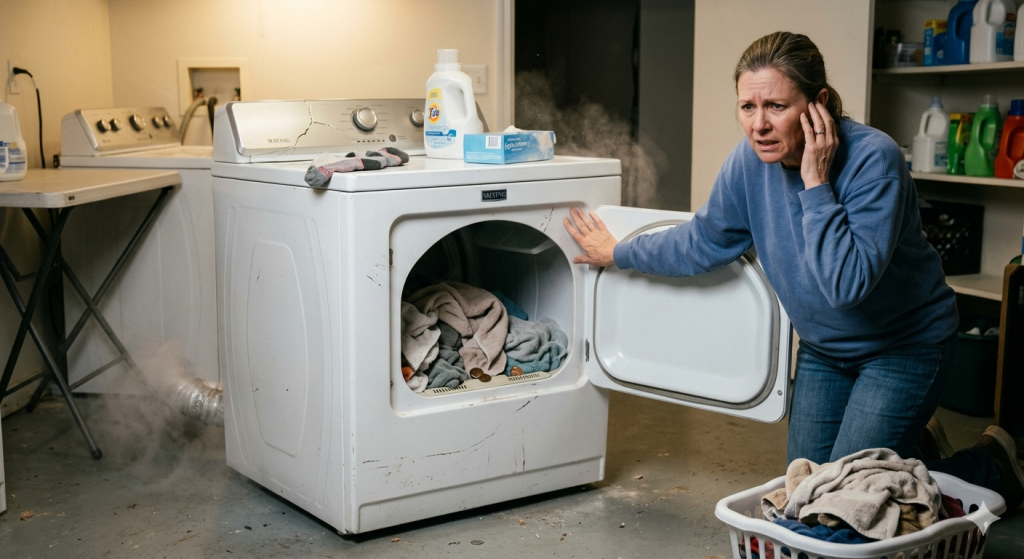
A quiet hum and gentle tumbling — that’s what a healthy dryer sounds like. When that peaceful background noise turns into a squeak, squeal, grinding, or thumping, it’s your dryer’s way of telling you that something needs attention. The good news is that most dryer noises have identifiable causes and can be fixed without replacing the entire appliance.
Homeowners throughout Tampa, Wesley Chapel, Lutz, Shady Hills, and other parts of the Tampa Bay area call us regularly about noisy dryers. A squeaking dryer is almost always caused by a worn mechanical component, and diagnosing it correctly is the first step toward a quiet laundry room again.
Understanding What’s Inside Your Dryer
Before we get into the specific causes of squeaking, it helps to know the key moving parts inside a dryer:
- The drum: The large rotating cylinder that tumbles your clothes
- The drum belt: A long, thin rubber belt that wraps around the drum and is driven by the motor
- Drum rollers (or drum support rollers): Small wheels, usually at the rear (and sometimes front) of the cabinet that support and guide the spinning drum
- The idler pulley: A tensioning wheel that keeps the drum belt tight
- Front and rear drum bearings/glides: Friction-reducing components where the drum contacts the front and rear of the cabinet
- The blower fan: A fan that moves hot air through the drum and out the exhaust vent
Any one of these parts can wear out and produce a squeaking or grinding noise.
The Most Common Causes of a Squeaking Dryer
1. Worn Drum Support Rollers
Drum support rollers are small wheels — usually two at the rear of the cabinet and sometimes two at the front — that the drum rests and rotates on. These rollers have an axle and a rubber or plastic wheel that can wear down, crack, or flatten over time. When the rollers wear out, the drum doesn’t rotate smoothly, and you get a squeaking, thumping, or rumbling noise that’s often rhythmic (it repeats with each rotation of the drum).
Worn drum rollers are one of the most common causes of dryer noise. When replacing them, it’s usually worth replacing all of the rollers at once even if only one appears worn — they tend to have similar hours of use and will fail at similar times.
2. A Worn or Fraying Drum Belt
The drum belt is a long, ribbed rubber belt that wraps around the drum and connects to the drive motor. Over years of use, the belt can stretch, crack, fray, or develop flat spots. A worn belt may produce a squealing or thumping sound as the drum rotates, and in more advanced cases you may also notice the drum taking slightly longer to start turning when you press start.
If the belt breaks entirely, the dryer motor will run but the drum won’t spin at all. A squealing sound that happens specifically when you start the dryer and then fades is often early-stage belt wear. Catching it before it breaks is ideal — a broken belt usually means waiting for a repair visit while your wet laundry piles up.
3. A Failing Idler Pulley
The idler pulley is a spring-loaded tensioner that keeps the drum belt under constant tension. When the pulley’s bearing wears out, it can squeak or squeal as it spins. This noise is often high-pitched and may become more noticeable as the dryer warms up.
A worn idler pulley bearing can be felt by hand when the dryer is unplugged — the pulley should spin freely and smoothly. Grinding, resistance, or a rough feel when spun by hand indicates it needs replacement. Idler pulleys are inexpensive parts, and they’re often replaced at the same time as the drum belt since accessing one typically means accessing the other.
4. Worn Drum Glides or Bearing Pads
The front of the drum doesn’t use rollers — instead, it slides against plastic glides or bearing pads that reduce friction where the drum contacts the front bulkhead. As these glides wear down, metal-to-metal contact can occur, causing a scraping or squeaking noise.
Worn drum glides often produce a noise that changes when you shift the load inside the dryer — the sound is louder or softer depending on how the drum presses against the front. They’re inexpensive to replace but do require disassembling the front of the dryer cabinet.
5. A Failing Rear Drum Bearing
Some dryers — particularly older models — use a shaft and sleeve bearing at the rear of the drum rather than drum support rollers. When this bearing wears out, it produces a squealing or squeaking sound that can be quite loud. It may also cause the drum to wobble or sag at the rear.
Rear drum bearing replacement is a moderately involved repair that often requires removing the entire drum from the cabinet.
6. Something Caught in the Blower Fan
Not all dryer noises come from the drum components. If a small object — a coin, a screw, a button — gets past the lint trap and into the blower fan, it can create a rattling, scraping, or intermittent squeaking noise as the fan tries to spin around it. This noise often changes character when you open the dryer door (since the fan stops).
Foreign objects in the blower are less common than drum component wear, but worth checking. The blower housing is accessible via the rear panel or front of the dryer, depending on the model.
How to Narrow Down the Cause
Here’s how to help identify where the noise is coming from:
- If the noise is rhythmic and repeats with every drum rotation: Likely drum support rollers or drum glides.
- If the noise is a high-pitched squeal that gets louder as the dryer warms up: Often the idler pulley or drum belt.
- If the noise changes when you shift the laundry load: Drum glides or rear bearing.
- If the noise starts when you press start and fades after a few minutes: Could be belt wear or a bearing that needs to warm up.
- If there’s a rattling or grinding that changes when you open the dryer door: Check for a foreign object in the blower fan.
Is This a DIY Fix?
Many dryer noise repairs are within reach for handy homeowners — especially replacing drum support rollers, the drum belt, and the idler pulley. These repairs typically require removing the front panel or top of the dryer to access the drum, and there are good instructional videos available for most major brands. However, the job does require some comfort with appliance disassembly and reassembly.
If you’re not confident in your mechanical skills, or if you’re dealing with a newer dryer under warranty, professional repair is the way to go. A squeaking dryer that’s left unrepaired will eventually get worse — worn rollers become seized rollers, and a fraying belt becomes a broken belt.
You might also find it helpful to review our guide on dryer parts to check when your dryer isn’t heating — sometimes a noisy dryer is also a dryer with a heating problem, and addressing both at once saves a second service visit.
Related Dryer Maintenance Tips
A squeaking dryer is a reminder that maintenance matters. Our article on maintaining your dryer to prevent fire hazards covers the basics of keeping your dryer safe and efficient — including how often to clean the lint trap, vent, and exterior. And if your dryer is taking a long time to dry clothes in addition to making noise, check out our guide on why dryers take too long to dry.
When to Call SkyBreeze
If you’ve identified the likely cause but aren’t comfortable doing the repair yourself, or if the noise persists after your attempt, the team at SkyBreeze Appliance Repair is here to help. We serve homeowners throughout the Tampa Bay area — including Hudson, Land O’ Lakes, Dade City, Zephyrhills, and The Villages — with fast, reliable dryer repair at transparent prices.
Don’t let a squeaking dryer turn into a broken dryer. Early repair is almost always less expensive than waiting for a complete component failure.
Brand-Specific Dryer Designs and Repair Approaches
Dryer designs vary significantly by brand, which affects both how they fail and how accessible repairs are:
Whirlpool, Maytag, Amana, and KitchenAid
These brands (all Whirlpool Corporation products) share many platforms and parts. Their dryers are generally considered among the most repair-friendly by technicians — parts are widely available, and many models can be serviced from the front by simply removing the front panel. If you have a Whirlpool or Maytag dryer making noise, drum support roller kits are some of the most commonly stocked parts at appliance repair shops.
Samsung and LG Dryers
Samsung and LG dryers tend to have more electronic components and digital controls than traditional designs. They’re also designed with front-access service in mind on most models. One Samsung-specific note: some older Samsung dryer models used a drum support bearing system instead of individual rollers, which can produce a different type of noise (more of a sustained squeal than a rhythmic thump).
Electrolux and Frigidaire
Frigidaire and Electrolux dryers are often serviced from the rear, which means removing the back panel to access the drum components. The drum support rollers on these models are positioned at the rear of the drum and are accessible after removing the back panel and disconnecting the belt.
GE Dryers
GE dryers use a front-access design on many models. The drum bearing (a nylon bearing pad at the rear of the drum) is a common wear component on GE models and produces a distinct squeal or squeak when it wears down.
The Cost of Waiting
A squeaking dryer is a dryer with a wear component that’s approaching failure. The cost of addressing it now vs. waiting is significant:
- Drum support rollers replaced early: $150–$250 in parts and labor
- Drum belt replaced proactively: $100–$200 in parts and labor
- Drum belt plus rollers replaced together (typical kit): $175–$300
- Drum bearing failure leading to drum drop and cabinet damage: $300–$500+, sometimes not repairable cost-effectively
Replacing the drum roller, belt, and idler pulley as a kit — which is the standard recommendation — costs about the same as replacing them individually. Since accessing one requires accessing all of them, doing the full kit prevents the need for a second service call within the next year or two.
How Florida’s Climate Affects Dryer Wear
In Florida, the combination of heat and humidity creates conditions that can accelerate dryer wear in a few specific ways:
High humidity means clothes coming out of the washing machine contain more residual moisture than in drier climates. The dryer has to work harder and run longer cycles to fully dry clothes, which puts more hours on drum components per year. This is amplified in areas like Hudson and Shady Hills where many homes don’t run air conditioning as aggressively, leaving the laundry room warmer and more humid.
Additionally, Florida’s lint accumulation in dryer vents is significant. A partially blocked vent forces the dryer to run longer, which adds hours to wear components. Keeping the vent clean — as covered in our dryer maintenance guide — directly reduces wear on drum components by keeping cycle times efficient.
If your dryer is both squeaking and taking too long to dry clothes, address the vent first — it may be contributing to both problems. A clear, unobstructed vent often reduces drying times noticeably, which in turn reduces the runtime load on drum bearings and rollers.
Key Takeaways
A squeaking or squealing dryer is almost always caused by worn drum support rollers, a fraying drum belt, a failing idler pulley, worn drum glides, a rear drum bearing, or a foreign object in the blower. The type and rhythm of the noise can help you pinpoint the cause. Many of these repairs are DIY-friendly, but professional help is available if you’d rather leave the disassembly to someone else.
Related Articles
- Dryer Not Heating? Parts to Check First
- Dryer Takes Too Long to Dry? Here’s Why
- Dryer Vent Too Hot? Warning Signs to Know
- How to Maintain Your Dryer and Prevent Fire Hazards
- Dryer Drum Not Turning? Causes and Fixes