Oven Door Won’t Close Properly? How to Fix It
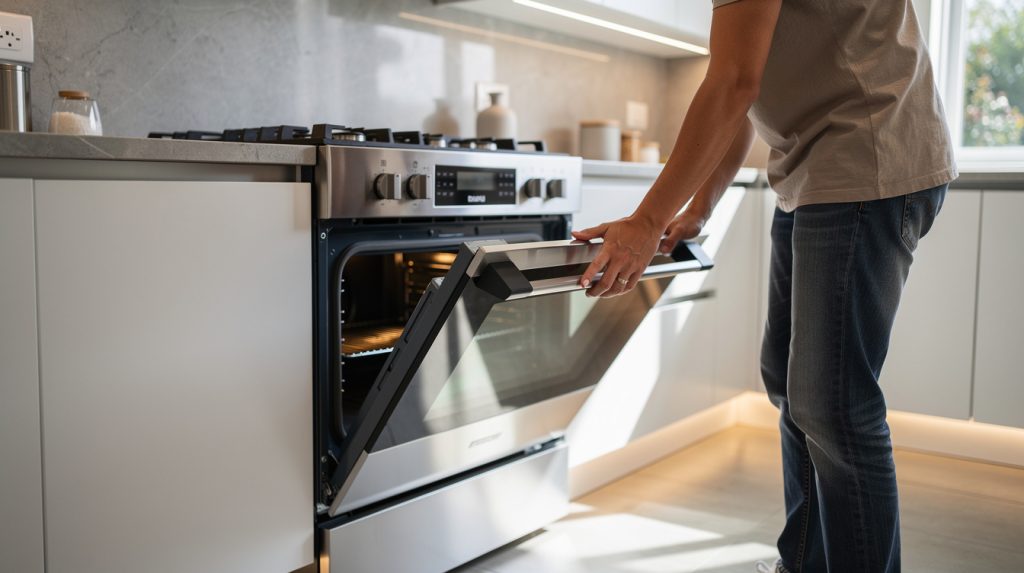
An oven that doesn’t close all the way is more of a problem than most people realize. It’s easy to think “it’s close enough” and keep cooking — but a gap in the oven door allows heat to escape continuously, which means longer cook times, higher energy bills, unpredictable cooking results, and potential safety hazards from heat radiating into your kitchen. It also puts extra strain on the oven’s heating elements as they work harder to maintain temperature.
Homeowners across Tampa, Wesley Chapel, Land O’ Lakes, and the surrounding areas deal with oven door problems regularly. The causes range from simple DIY fixes to more involved repairs, and knowing which situation you’re dealing with helps you choose the right approach.
How Oven Doors Are Supposed to Work
An oven door seals against the oven opening using a door gasket — a flexible seal made of braided fiberglass, silicone, or rubber that runs around the perimeter of the door opening. When the door closes, this gasket creates a tight seal that keeps hot air inside. The door is held in position by two hinges, one on each side, which allow it to swing open and closed while supporting its weight.
When either the gasket or the hinges are damaged or worn, the door won’t close properly or seal tightly.
Cause 1: A Worn or Damaged Door Gasket
The door gasket is the most common reason an oven won’t seal properly. Over years of high-temperature use, the gasket material can harden, crack, shrink, or develop tears. Even a small gap in the gasket allows heat to escape around the door.
To inspect your gasket, run your hand slowly around the perimeter of the oven door while the oven is at operating temperature (carefully — the oven is hot). If you feel warm air escaping anywhere, the gasket isn’t sealing in that spot. You can also do a visual inspection with the oven off: look for sections of the gasket that appear hard, brittle, shrunken, or visibly torn or compressed.
Replacing an oven door gasket is typically a DIY-friendly repair. Replacement gaskets are available for most oven brands and models — search by your oven’s model number (usually found on a label inside the door frame). Most gaskets simply push into a channel around the door opening or clip into place, requiring no tools. The job takes about 15 minutes.
How to Replace an Oven Door Gasket
- Make sure the oven is completely cool and unplugged (or the circuit breaker is off)
- Remove the old gasket by pulling it out of the retaining channel — on some models, small screws hold it in place at the corners
- Clean any debris or residue from the channel with a damp cloth
- Starting at a corner, press the new gasket into the channel, working around the perimeter
- Make sure the gasket sits evenly with no bunched or stretched sections
- Test by running the oven and checking for heat escape
Cause 2: Damaged or Worn Oven Door Hinges
The oven door hinges are heavy-duty metal components designed to support the weight of the door through thousands of open-and-close cycles. Over time, hinge springs can weaken, hinge mechanisms can bend, or the spring-loaded portions of the hinge can lose tension. When this happens, the door may droop, sit crooked in the opening, or fail to stay fully closed without being held.
Signs of hinge problems include:
- The door appears to sag or hang lower on one side than the other
- The door requires extra force to close or doesn’t stay closed on its own
- You hear a grinding or scraping sound when opening and closing the door
- The door moves unevenly from side to side during operation
Replacing oven door hinges is a moderate repair. Most oven doors can be removed by opening the door fully and pulling upward or sliding out the hinge locks — consult your owner’s manual for the specific procedure for your model. Once the door is off, the hinges are typically held by two or three screws each. Replacement hinges are available for most major brands.
Cause 3: Buildup or Debris in the Hinge
Sometimes oven door problems aren’t caused by worn parts at all — they’re caused by grease, food debris, or carbon deposits that have accumulated in the hinge mechanism over years of cooking. This buildup can prevent the hinge from moving freely or from latching properly.
If the door seems stiff or isn’t closing smoothly, inspect the visible parts of the hinge (accessible when the door is open) and clean away any visible debris. In some cases, the self-clean cycle can bake debris onto hinges, making this a more significant cleaning job. Use a stiff brush and a degreaser designed for oven use.
Cause 4: Misalignment After Cleaning or Moving the Oven
If your oven door problems started after you used the self-clean cycle, had the oven serviced, or moved the appliance, misalignment may be the issue. Oven doors can sometimes shift slightly out of alignment when the appliance is moved or when extreme heat causes slight warping.
Check whether the door sits evenly in the frame — is it the same distance from the top of the opening all the way across, or does it tilt? If it’s tilted, the hinges can sometimes be adjusted, or one hinge may need to be re-seated. On some models, there are adjustment screws on the hinges themselves.
Cause 5: Oven Drawer Obstruction
This one is simple but surprisingly common: if your oven has a storage or warming drawer at the bottom and that drawer isn’t fully pushed in, it can interfere with the oven door’s ability to close completely. Before assuming there’s a mechanical problem, make sure the drawer is fully seated.
Why You Shouldn’t Ignore a Poor Oven Seal
An oven door that doesn’t close properly isn’t just an inconvenience. Here’s why it matters:
- Energy waste: Heat escaping through the door gap means the oven runs longer and uses more electricity to reach and maintain temperature
- Uneven cooking: A cooler oven interior (due to heat loss) produces inconsistent results — this is often mistaken for an uneven heating element issue
- Safety concerns: Excess heat radiating through a poorly sealed door can get very hot at counter level, posing a burn risk
- Component wear: Heating elements that run more frequently wear out faster
Related Oven Issues
If your oven door is also showing temperature-related cooking problems, review our guide on oven not heating evenly. And if your oven has stopped turning on entirely, our article on oven won’t turn on covers that diagnostic process step by step.
When to Call SkyBreeze
Gasket replacement is a legitimate DIY repair for most homeowners. Hinge replacement is within reach for those comfortable with removing an oven door. But if you’re dealing with a hinge that’s bent or broken, an alignment problem you can’t resolve, or any issue that requires opening up the oven’s internal components, professional service is the smarter choice.
The team at SkyBreeze Appliance Repair services ovens throughout the Tampa Bay area — from Wesley Chapel and Lutz to Shady Hills and The Villages. We carry hinge assemblies and gaskets for all major brands and can typically complete door repairs in a single visit. Don’t let a poorly sealing oven door drain your energy budget or ruin another meal — give us a call and we’ll get it right.
The Self-Clean Cycle and Oven Door Problems
One of the most common triggers for oven door problems is the self-cleaning cycle. Here’s why: the self-cleaning cycle heats the oven to extreme temperatures — typically 800–1000°F — to incinerate food residue. While this cleans the oven effectively, it subjects every metal component (including the hinges and door frame) to significant thermal stress.
After a self-clean cycle, you may notice:
- The door doesn’t close as tightly as it did before
- One side of the door appears to sit lower than the other
- The door feels stiffer or looser to open and close
- The door gasket has hardened, shrunk, or developed cracks
These changes happen because extreme heat can cause slight warping of the door frame and hinge components, and can permanently harden or damage the door gasket. For this reason, many appliance repair professionals recommend using the self-clean cycle no more than once or twice per year — and some suggest avoiding it entirely in favor of manual cleaning, as covered in our guide on deep cleaning your oven without chemicals.
If your oven door problems appeared immediately after a self-clean cycle, the thermal stress of the cycle is the likely cause. A professional technician can assess whether the door frame has warped, whether the hinges have bent, and whether the gasket needs replacement — and advise whether the oven door can be realigned or whether component replacement is needed.
Brand-Specific Oven Door Notes
Samsung Double-Door and Flex Duo Ovens
Samsung’s French door and Flex Duo oven designs have more complex door mechanisms than traditional single-door ovens. If the door alignment is off on a Samsung flex oven, the two-door system may require professional adjustment to realign properly.
GE and Whirlpool Traditional Ranges
These brands use well-established hinge designs that are typically easy to replace. Replacement hinge assemblies for most Whirlpool, GE, Frigidaire, and Maytag models are widely available and often stocked by local appliance parts suppliers.
Bosch and Thermador Wall Ovens
Wall ovens from premium brands like Bosch and Thermador have soft-close door mechanisms that provide a gentler close. These mechanisms can wear out, and once they do, the door may no longer stay fully closed without the dampened resistance. Soft-close mechanism replacement is a professional repair on these models.
Oven Door Safety: What to Know
When working on your oven door, a few safety reminders are worth keeping in mind:
- Always disconnect power before any work — unplug the range or turn off the circuit breaker at the panel
- Oven doors are heavy — most weigh 15–25 pounds. Have a second person assist when removing the door, and place it on a padded surface
- Never leave the oven running with a poorly sealed door — heat radiating from an open door gap can burn countertops, cabinet fronts, and reaching hands at counter height
- If your oven is connected to a gas supply in a combination range (though SkyBreeze services electric ovens only), gas components should only be touched by a licensed technician
Energy Impact of a Poor Door Seal
Quantifying the energy impact of a poorly sealing oven door is difficult, but appliance research suggests that significant heat loss through the door (a visible gap or clearly failed gasket) can increase cooking energy use by 20% or more. For a household that uses the oven frequently, this adds up meaningfully over a year. Replacing an oven door gasket for $30–$50 and 15 minutes of time has a very quick payback through energy savings — making it one of the most cost-effective appliance maintenance tasks available to homeowners.
Summary
An oven door that won’t close properly is almost always caused by a worn gasket, damaged hinges, accumulated debris in the hinge mechanism, post-cleaning misalignment, or an obstructed drawer. Start by checking the gasket — it’s the most common cause and the easiest to replace. If hinges are involved, the repair is more involved but well within reach for a confident DIYer or a technician.
Related Articles
- Oven Won’t Turn On? Simple Steps to Diagnose
- Oven Not Heating Evenly? Here’s the Fix
- Oven Self-Clean Cycle Problems and Fixes
- How to Deep Clean Your Oven Without Chemicals
- Repair vs. Replace: How to Make the Right Call