Washing Machine Won’t Fill With Water? 7 Causes and Fixes
You toss in a load of laundry, add detergent, hit Start — and then you wait. And wait. The machine hums, maybe a thin trickle of water dribbles in, but the drum never fills the way it used to. Or worse, nothing comes in at all and the washer eventually flashes an error code and gives up. If your washing machine won’t fill with water (or fills so slowly that a single load takes all morning), the cause is almost always somewhere along the path the water travels — and most of that path is checkable without any special tools.
Let’s trace that path together, from the wall to the drum, the same way a technician would diagnose it in your laundry room.
How Water Gets Into Your Washer in the First Place
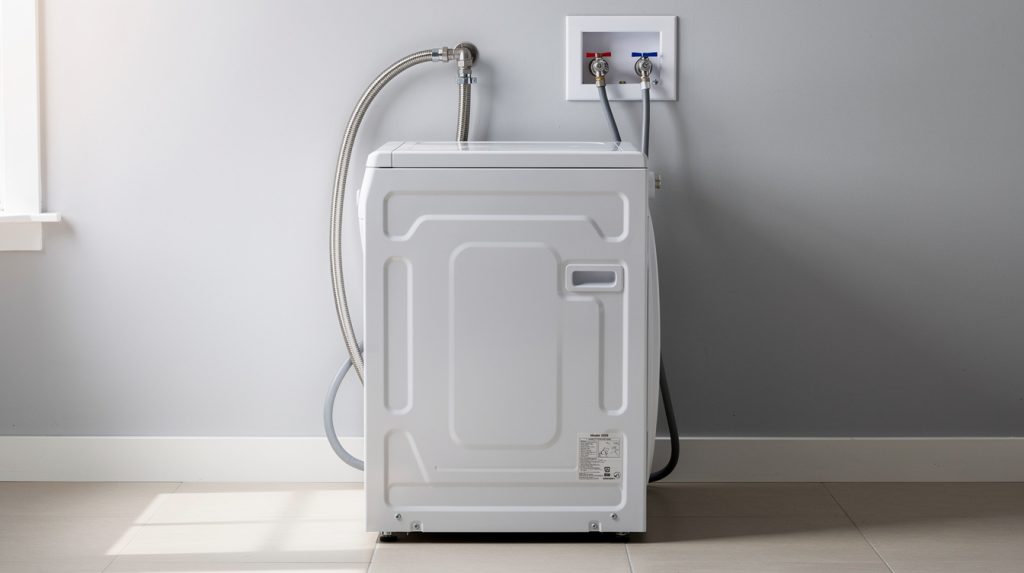
Understanding the route makes troubleshooting much easier. Water leaves your home’s plumbing through two supply valves (hot and cold) on the wall behind the washer. It travels through two fill hoses, passes through small mesh inlet screens, and arrives at the water inlet valve — an electrically controlled valve mounted just inside the washer’s cabinet. When the control board calls for water, it sends voltage to the inlet valve, which opens and lets water flow to the tub. A pressure sensor (or pressure switch) tells the board when the water level is high enough to stop.
A failure at any point in that chain — valves, hoses, screens, inlet valve, pressure sensor, or the control board itself — gives you the same symptom: a washer that won’t fill. Here’s how to figure out which link is broken.
Check These 7 Things, In This Order
1. Are Both Supply Valves Fully Open?
It sounds almost too simple, but partially closed supply valves are a genuinely common cause — especially after plumbing work, a move, or anyone fiddling behind the washer. Both the hot and cold valves should be turned fully counterclockwise. Keep in mind that many washer cycles use only cold water, so even if your hot valve is open, a closed cold valve can stop most cycles from filling.
While you’re back there: if your home has older gate-style valves, they can fail internally so the handle turns but the valve doesn’t actually open. If you suspect this, disconnect the hose (with a bucket handy) and briefly open the valve to confirm strong flow.
2. Are the Fill Hoses Kinked?
Washers get pushed tight against the wall, and fill hoses fold and kink behind them. A kinked hose chokes the water flow to a trickle. Pull the washer out a few inches and inspect both hoses along their entire length. While you’re at it, check the hoses’ age — rubber fill hoses should be replaced every five years or so. A bulging or cracking fill hose is a flooding incident waiting to happen, something we cover in detail in our guide to preventing washing machine flooding.
3. Are the Inlet Screens Clogged?
This is the big one in our service area. Where each fill hose connects to the washer, there’s a small dome-shaped mesh screen designed to catch sediment before it reaches the inlet valve. Florida’s hard, mineral-rich water — plus the sediment that shows up in homes in Hudson, Dade City, and Zephyrhills on well water — clogs these screens steadily over time. A washer that fills slower and slower over months is the classic symptom.
To clean them: turn off both supply valves, unscrew the fill hoses from the back of the washer (bucket handy — water will spill), and look into the inlet ports. Gently pry the screens out with needle-nose pliers or pick the debris out in place with a toothbrush. Don’t puncture them. Soak crusty screens in white vinegar for an hour to dissolve mineral scale, rinse, and reinstall.
4. Is the Lid or Door Locking Properly?
Most washers refuse to fill if they can’t confirm the lid or door is closed and locked. If the lock mechanism is failing, the cycle never really begins — some machines display an error code, others just sit silently. Listen for the click of the lock engaging when you start a cycle. On front-loaders, make sure nothing (a sock, the door boot) is preventing the door from latching fully. A failed lid switch or door lock assembly is an inexpensive part, though replacement difficulty varies by model.
5. Is the Water Inlet Valve Failing?
If water reaches the back of the washer with good pressure but little or nothing comes into the drum, the inlet valve itself is the leading suspect. These valves contain small solenoids that wear out — sometimes one side fails first, which is why some machines will fill for a warm wash but not a cold rinse, or vice versa.
Signs of a failing inlet valve include humming with no water flow, very slow filling with clean screens and good supply pressure, or a washer that only fills on certain cycle settings. Testing the solenoids requires a multimeter, and replacement involves opening the cabinet — a reasonable DIY job for the handy, or a quick fix for a technician.
6. Is the Pressure Switch or Hose Blocked?
The pressure sensor tells the control board when to stop filling — but if its air hose is pinched, cracked, or gunked up, it can also tell the board the tub is already full when it’s bone dry. The washer then “finishes” filling before it starts. If your machine fills for two seconds and quits, or skips straight to washing an empty drum, the pressure system deserves a look. This one’s worth leaving to a pro unless you’re comfortable with appliance teardowns.
7. Is It the Control Board or Timer?
Last on the list because it’s least common: the control board (or mechanical timer on older machines) may not be sending voltage to the inlet valve at all. This usually comes with other erratic behavior — unresponsive buttons, cycles that stall at other stages, or error codes. Before assuming the worst, try a hard reset: unplug the washer for a full minute, then restart. Our guide on how to reset any appliance walks through the reset procedures for all the major brands.
Slow Fill vs. No Fill: Reading the Symptom
The character of the problem points to the likely cause:
- Gradually slower filling over months: clogged inlet screens or mineral-scaled inlet valve — very common in Tampa Bay’s hard water
- Sudden complete stop: supply valve, lid lock, inlet valve solenoid, or control board
- Fills on some cycles but not others: one solenoid of the dual inlet valve has failed
- Fills briefly then stops: pressure switch or pressure hose problem
- Fills only when you jiggle the lid: lid switch on its way out
The Florida Factor: Hard Water and Sediment
If you live anywhere in the greater Tampa Bay area, your washer is filling with some of the hardest water in the country. Calcium and magnesium scale doesn’t just clog inlet screens — it builds up inside the inlet valve itself, narrowing the passage year after year. Homes on well water in Hudson, Shady Hills, and Dade City fight sediment on top of scale.
Two habits help: clean your inlet screens once a year (put it on the calendar — it takes ten minutes), and if your home has a water softener, make sure it’s actually working. Your washer, dishwasher, and water heater will all live longer for it. For more washer longevity habits, our washing machine maintenance guide covers the full routine.
What a Repair Typically Costs
- Inlet screen cleaning: free if you DIY, often bundled into any service call
- New fill hoses: $20–$40 for quality braided stainless hoses — cheap insurance
- Water inlet valve replacement: $120–$220 including parts and labor
- Lid switch / door lock replacement: $100–$200
- Pressure switch repair: $120–$200
- Control board: $200–$350 depending on brand
Compare those numbers against your machine’s age. A 4-year-old washer with a bad inlet valve is an easy call to repair; a 13-year-old machine with a failing control board may not be.
When to Bring In Help
If you’ve opened the valves, straightened the hoses, cleaned the screens, and confirmed the lid locks — and the drum still stays dry — the problem is inside the machine, and that’s exactly what we’re here for. SkyBreeze Appliance Repair diagnoses and fixes washer fill problems across Tampa, Wesley Chapel, Lutz, Land O’ Lakes, Shady Hills, Hudson, Dade City, Zephyrhills, and The Villages — usually in a single visit, with an honest assessment of whether the repair makes sense for your machine’s age and condition.
A washer that won’t fill is frustrating, but it’s rarely fatal. Work down the checklist, and odds are good you’ll find the blockage before the technician would.