Why Your Oven Heats Unevenly (And What You Can Do About It)
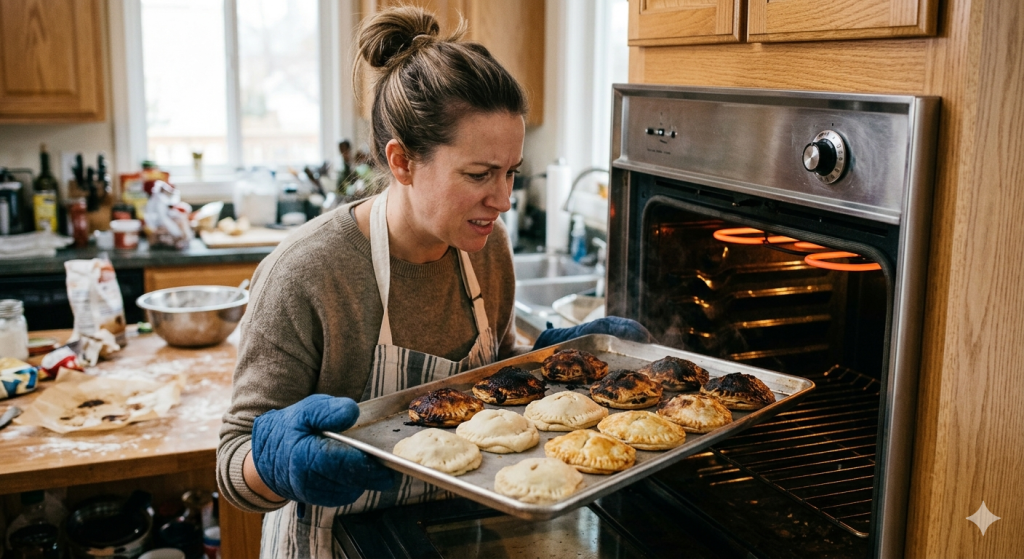
Few things are more frustrating in the kitchen than pulling a tray of cookies out of the oven only to find that one side is perfectly golden while the other is still doughy. Or slicing into a casserole that is scorching on top but lukewarm in the middle. Uneven oven heating is one of the most common complaints homeowners have about their ovens, and the good news is that most of the time, there is a clear cause and a fixable solution.
Whether you have an electric or a gas-free electric oven, understanding why temperature varies inside the cavity helps you determine whether this is a quick fix, a maintenance issue, or something that requires a professional oven repair.
How Your Oven Is Supposed to Heat
A standard oven works by heating air inside a sealed cavity. Electric ovens use one or two heating elements — a bake element at the bottom and a broil element at the top — to generate heat. The thermostat monitors the internal temperature and cycles the elements on and off to maintain your selected setting. In a convection oven, a fan at the back circulates the heated air for more even cooking.
Even in a perfectly functioning oven, some temperature variation is normal. The back of the oven tends to be slightly warmer than the front because the front loses a small amount of heat through the door. Hot air naturally rises, so the top of the oven runs a few degrees warmer than the bottom. These minor variations are what experienced bakers account for when they rotate trays halfway through baking. However, when one side is significantly hotter than the other, or the temperature is wildly inaccurate, something is genuinely wrong.
Cause #1: A Failing Heating Element
The most common cause of uneven heating in an electric oven is a heating element that is partially burned out. When a bake element fails, it does not always stop working entirely. Sometimes it develops a hot spot or a visible break where the coil no longer glows evenly. You can check this yourself — turn the oven on to bake and watch the bottom element through the oven window. It should glow a consistent red-orange along its entire length. If you see dark spots, areas that are not glowing, or visible cracks, the element needs replacement.
The broil element at the top can cause similar issues. If your oven heats well from the bottom but not the top (or vice versa), the culprit is usually a failed element on the opposite side. Heating elements are relatively inexpensive parts and straightforward for a technician to replace. If your oven will not turn on at all, the element failure may be complete rather than partial.
Cause #2: A Faulty Oven Temperature Sensor
Every modern oven has a temperature sensor (also called an oven sensor or resistance temperature detector) that monitors the internal temperature and communicates with the control board. This sensor is usually a thin metal probe extending into the oven cavity from the back wall. If the sensor gives inaccurate readings, the oven may overshoot the target temperature, undershoot it, or cycle erratically — all of which produce uneven cooking results.
You can test the sensor with a multimeter if you are comfortable with basic electrical testing. At room temperature, most oven sensors should read about 1,080 ohms. The resistance increases as the temperature rises. If the reading is significantly off at room temperature, the sensor is faulty. A replacement sensor typically costs between $20 and $50, and a qualified technician can swap it out in under an hour.
Cause #3: Poor Calibration
Oven calibration refers to whether the actual internal temperature matches what the display or knob says. Over time, ovens can drift out of calibration, sometimes by as much as 25 to 50 degrees Fahrenheit. This means when you set the oven to 350 degrees, it might actually be running at 300 or 400 degrees. This is not technically uneven heating, but it produces the same frustrating result — food that does not cook as expected.
You can check calibration with an inexpensive oven thermometer. Place it in the center of the middle rack, set the oven to 350 degrees, and let it preheat fully. Wait another 15 minutes for the temperature to stabilize, then check the thermometer. If it reads more than 10 degrees off, your oven needs recalibration. Many ovens allow you to adjust the calibration through the settings menu — check your owner’s manual for specific instructions. If you cannot find the calibration setting or are not comfortable adjusting it, a technician can handle this during a routine oven service call.
Cause #4: A Broken Convection Fan
If your oven has a convection setting and you notice uneven heating specifically when using that mode, the convection fan may be failing. The convection fan is located behind a panel at the back of the oven cavity and its job is to circulate hot air evenly throughout the space. When the fan motor weakens, the blades spin too slowly to create proper air circulation, leading to hot and cold spots.
Listen for unusual sounds when the convection mode is active. A healthy fan should produce a soft, steady hum. Grinding, squealing, or rattling noises suggest the motor bearings are wearing out. If the fan does not spin at all, the motor has likely failed. Convection fan motors are a common repair for oven technicians and restoring proper fan operation can dramatically improve cooking evenness.
Cause #5: A Worn or Damaged Door Gasket
The rubber gasket that seals the oven door is easy to overlook, but it plays a critical role in maintaining even heat. When the gasket deteriorates, cracks, or becomes compressed from years of use, hot air escapes from around the door edges. This does not just waste energy — it creates a temperature gradient inside the oven. The areas near the door lose heat faster than the back of the oven, leading to food that cooks unevenly front to back.
Inspect the gasket visually. Run your fingers along it and feel for areas that are hard, cracked, torn, or compressed flat. Close the oven door and hold your hand near the edges — if you feel significant warmth escaping, the gasket is not sealing properly. Replacement gaskets are available for most oven models and can be pressed or clipped into place, though some models require more involved installation.
Cause #6: Incorrect Rack Placement
Sometimes the issue is not with the oven at all — it is with how you are using it. Placing food too close to the top element can cause browning or burning on top while the center remains undercooked. Placing food too low can produce the opposite effect. For most baking and roasting, the center rack provides the most even results because it positions your food equidistant from both heating elements.
Also consider how full the oven is. Overcrowding blocks airflow and prevents hot air from circulating evenly. If you are baking multiple trays, stagger them so they do not sit directly above each other. Leave at least two inches of space around each tray to allow air to flow freely. And always use the right size pan — a small pan in a large oven may heat differently than a pan that fills most of the rack.
Cause #7: Hot Spots From Oven Design
Every oven has natural hot spots, even when it is functioning perfectly. These are areas that consistently run a few degrees warmer due to the proximity of heating elements, the shape of the cavity, and how air circulates. In most ovens, the back and top tend to be slightly warmer. This is normal and is why most baking instructions suggest rotating your pans halfway through the cooking time.
If you are unsure where your oven’s hot spots are, try the bread test. Lay white bread slices across the entire oven rack, turn the oven to 350 degrees, and bake for a few minutes until the bread starts to toast. The pattern of toasting will reveal exactly where the hot spots are. This simple test takes 10 minutes and gives you a permanent map of your oven’s personality.
The Impact of Preheating Properly
One of the most overlooked causes of uneven cooking is not preheating long enough. Most ovens signal that they have reached the set temperature well before the entire cavity is actually at an even temperature. The element may have brought the air to 350 degrees briefly, but the walls, racks, and floor of the oven are still absorbing heat. Putting food in too early means it starts cooking in an uneven thermal environment.
For the best results, let your oven preheat for at least 15 to 20 minutes beyond the beep. This extra time allows all the surfaces inside the oven to come to temperature, creating a much more uniform cooking environment. If you are baking something temperature-sensitive like pastries or souffles, this extra preheating time can make the difference between success and failure.
When to Worry About Electrical Issues
If your oven is dramatically uneven — one side burning while the other barely warms — and you have ruled out elements, sensors, and door gaskets, the issue might be electrical. A failing control board can send incorrect signals to the heating elements, causing them to behave erratically. Loose wiring connections can cause intermittent heating. A tripped breaker on a double-breaker oven circuit can cause the oven to heat at half power, producing underpowered and uneven results.
Electrical issues are not DIY territory. If you suspect a control board or wiring problem, it is time to call a professional. Working with oven electrical components involves high voltage and serious safety risks. A qualified technician can test the control board, inspect wiring connections, and identify the exact point of failure safely. Check your appliance’s error codes — many ovens display diagnostic codes that help a technician pinpoint the issue before they even open a panel.
Maintenance Tips to Prevent Uneven Heating
Prevention is always easier than repair. Regularly deep clean your oven to remove baked-on grease and food residue that can interfere with heat distribution. Check the door gasket every six months for signs of wear. Avoid slamming the oven door, as repeated impacts can damage the gasket and loosen the hinge alignment. Use the correct cookware — dark pans absorb more heat while light-colored pans reflect it, and glass bakeware retains heat longer than metal.
If your oven is more than 10 to 15 years old and you are experiencing chronic uneven heating despite replacing sensors and elements, it may be time to consider whether repairing or replacing makes more financial sense. A technician can help you evaluate the cost of ongoing repairs against the investment in a new oven.
When to Call a Professional
Some oven issues are straightforward enough for a handy homeowner to address — replacing a visible broken element, recalibrating through the settings menu, or swapping a worn door gasket. But if the problem persists after these basic steps, or if you are seeing error codes, hearing unusual noises, or smelling something burning when the oven is on, professional help is the smart choice.
For homeowners in Tampa, Wesley Chapel, Lutz, Land O’ Lakes, Dade City, Zephyrhills, Hudson, Shady Hills, and The Villages, a local oven repair service can diagnose the root cause quickly and get your oven back to even, reliable heating. Uneven cooking is more than an annoyance — it wastes food, wastes energy, and turns meal preparation into a guessing game. Getting it fixed restores confidence in your kitchen and saves you from the frustration of inconsistent results.