Refrigerator Water Dispenser Not Working? Causes and Fixes
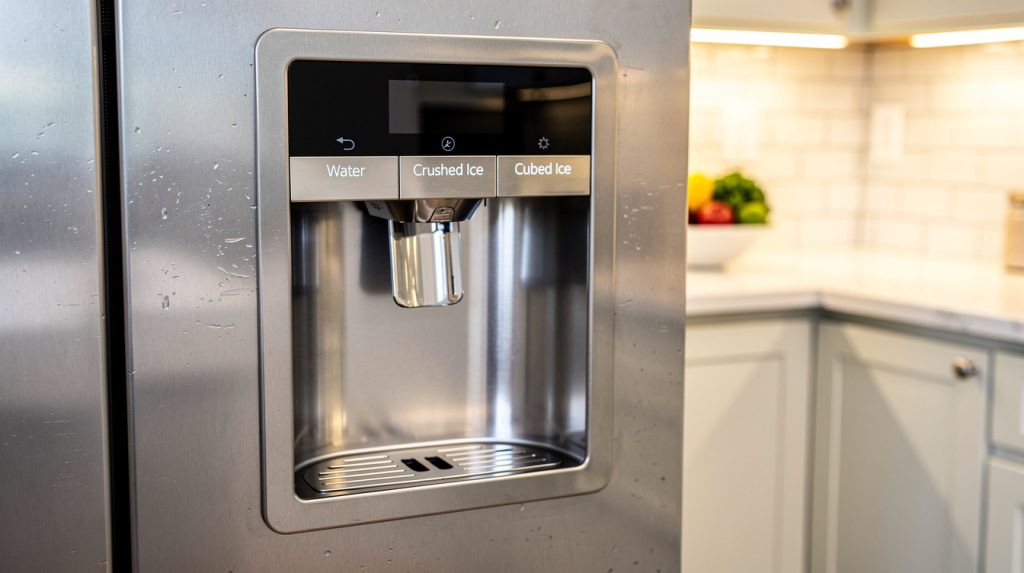
You press the lever on your refrigerator’s water dispenser expecting a cool stream of filtered water, and nothing happens. Or maybe it trickles out painfully slowly, sputters, or tastes off. A malfunctioning water dispenser is one of the more common refrigerator issues homeowners face, and while it is rarely an emergency, it is an inconvenience that you want resolved quickly — especially during a hot Florida summer.
The good news is that many water dispenser problems have straightforward causes that you can troubleshoot before calling for a professional refrigerator repair. Let us walk through the most common reasons your dispenser stops working and what you can do about each one.
Check the Water Supply Line First
Before investigating anything inside the refrigerator, verify that the water supply to the fridge is actually on. The water supply line connects from your home’s cold water pipe (usually under the kitchen sink or in the basement) to the back of the refrigerator through a small valve. If this valve was accidentally bumped and turned off — which can happen when cleaning behind the fridge or moving it — no water reaches the dispenser or the ice maker.
Locate the supply valve and make sure it is fully open. Also inspect the supply line itself for kinks. Many refrigerators use a thin flexible copper or braided steel line that can kink if the fridge was pushed back against the wall. A kinked line restricts water flow, causing weak or intermittent dispensing. Gently pull the refrigerator forward and straighten any visible kinks. If the line is badly kinked or damaged, replacing it with a new braided stainless steel line is inexpensive and prevents future issues.
The Water Filter May Need Replacing
If your refrigerator has a built-in water filter — and most modern refrigerators with dispensers do — a clogged filter is one of the most common causes of slow or stopped water flow. Water filters have a finite lifespan, typically six months depending on usage and water quality. As the filter traps sediment, minerals, and contaminants, it gradually becomes restricted. Eventually, water cannot pass through fast enough to satisfy the dispenser.
Most refrigerators display a filter status indicator light that changes from green to yellow to red as the filter nears the end of its life. Even if the light has not turned red, if your water pressure has been gradually declining, try replacing the filter. Use a filter rated for your specific refrigerator model — aftermarket filters may fit physically but can have different flow rates that cause problems. After installing a new filter, flush two to three gallons of water through the dispenser to purge air and carbon particles before drinking.
Frozen Water Line Inside the Refrigerator
This is a surprisingly common issue, especially in refrigerators where the freezer and refrigerator share cooling systems. The water supply tube that runs from the inlet valve to the dispenser passes through or near the freezer section. If the temperature is set too low or if the tube is positioned in a particularly cold zone, the water inside can freeze solid, completely blocking flow to the dispenser.
To check for a frozen line, disconnect the water supply tube at the point where it enters the freezer or the back of the dispenser housing (consult your manual for your model’s specific routing). If no water drips out when disconnected, the line is likely frozen. You can thaw it using a hair dryer on a low setting — move the warm air along the tube slowly without concentrating heat on any one spot. Never use a heat gun or open flame, as you can damage plastic components or create a fire risk.
If the line freezes repeatedly, the refrigerator may be running too cold. Check that your refrigerator is not freezing food — a temperature that is too low in the fridge compartment can also freeze the water line. The ideal refrigerator temperature is between 35 and 38 degrees Fahrenheit. Adjusting this may prevent the line from refreezing.
The Water Inlet Valve May Be Faulty
The water inlet valve is an electromechanical valve at the back of the refrigerator that controls water flow from the supply line into the fridge. When you press the dispenser lever, the control board signals the inlet valve to open. If the valve is faulty — either electrically (the solenoid is burned out) or mechanically (mineral buildup has clogged the valve screen) — water cannot enter the system regardless of supply pressure.
You can sometimes hear the valve trying to open when you press the dispenser — a faint hum or click from the back of the fridge. If you hear nothing, the valve may not be receiving power, which could indicate a control board issue. If you hear the valve engage but no water flows, the valve screen may be clogged or the valve itself has failed. Inlet valve screens can sometimes be cleaned by removing the valve and flushing the screen with vinegar, but a valve with a failed solenoid needs replacement. This is a repair best handled by a technician who can also test the electrical supply to the valve.
Dispenser Switch or Actuator Problems
The dispenser switch is the mechanism that activates when you press the lever or pad on the outside of the door. If this switch fails, your press does not send a signal to the control board, and the inlet valve never opens. On some models, the switch is a simple mechanical microswitch. On others, it is a sensor pad on a control panel. Either way, if it fails, the dispenser appears completely dead.
Test whether the issue is the switch by listening for any sound from the refrigerator when you press the dispenser. If absolutely nothing happens — no light, no sound, no hum — the switch or control panel may be the problem. On some models, you can test the switch with a multimeter for continuity. A failed switch typically needs to be replaced, which is a straightforward repair for a technician.
Low Water Pressure From Your Home Supply
Refrigerator water dispensers require a minimum water pressure to function properly — typically at least 20 psi (pounds per square inch). If your home’s water pressure is below this threshold, the dispenser may trickle weakly or not work at all. Low water pressure can also prevent the inlet valve from opening fully, since these valves are designed to operate within a specific pressure range.
You can check your home’s water pressure with an inexpensive gauge that attaches to an outdoor faucet. Normal residential pressure ranges from 40 to 60 psi. If your pressure is below 20 psi, the issue is with your home plumbing, not the refrigerator. Possible causes include a partially closed main water valve, a failing pressure regulator, or a problem with the municipal supply. A plumber can diagnose and resolve low-pressure issues.
The Door Switch May Be Triggered
Most refrigerators have a safety switch that disables the dispenser when the refrigerator door is open. This prevents you from accidentally dispensing water with the door ajar. If this door switch malfunctions — stuck in the open position even when the door is closed — the refrigerator thinks the door is always open and disables the dispenser permanently.
The door switch is usually a small plunger-style button near the top hinge of the refrigerator door. When the door closes, it presses this button. Check if the switch moves freely when you press it manually. If it is stuck, gently clean around it. If it springs freely but the dispenser still does not work when the door is closed, the switch may be electrically faulty. This is a simple and inexpensive part to replace.
Control Board Issues
The electronic control board manages all the signals in your refrigerator — including telling the inlet valve to open and the dispenser to engage. If the control board has a fault, it may not send the correct signals even when the switch, valve, and water supply are all functioning. Control board failures often show up as multiple features malfunctioning simultaneously. If your dispenser stopped working around the same time as other features — like the ice maker, interior lights, or temperature display — the control board may be involved.
Check your refrigerator for error codes on the display panel. Many modern refrigerators display diagnostic codes that point directly to the failing component. Write down any codes you see before calling for service — they save the technician time and can save you money on the diagnostic process. A simple reset of your refrigerator (unplugging for 5 minutes) can sometimes clear a temporary control board glitch and restore dispenser function.
Air Lock in the Water System
If you recently replaced the water filter, installed a new supply line, or had the water supply shut off for any reason, an air lock can form in the system. Air trapped in the water line creates a blockage that prevents water from flowing to the dispenser. You may hear the valve click open, but only a small amount of water or a burst of air comes out.
To clear an air lock, press and hold the dispenser lever for 30 seconds at a time. Release for a few seconds, then hold again. Repeat this process five to ten times. The sustained pressure from the water supply will gradually push the air pocket through the system. It may take several minutes of intermittent dispensing before the flow normalizes. Keep a large container handy because the first few cycles may produce sputtering water mixed with air.
Water Tastes Bad or Smells Off
If water is flowing but tastes or smells bad, the issue is almost always the filter. An old filter not only restricts flow but also stops effectively removing contaminants, allowing minerals, chlorine, and organic compounds to pass through. Replace the filter and flush the system. If the taste persists with a new filter, the water lines inside the refrigerator may need flushing — bacteria and biofilm can develop in supply tubes that have not been cleaned.
Vinegar flushing can help. Disconnect the supply line from the inlet valve, place the disconnected end in a container of white vinegar, and run the dispenser to draw vinegar through the system. Follow with several gallons of clean water to rinse. This is a good maintenance practice to perform annually, especially in areas with hard water like Tampa and surrounding Florida communities.
Preventing Future Dispenser Problems
Most water dispenser issues are preventable with basic maintenance. Replace the water filter on schedule — every six months for most models, or more frequently if you have hard water or heavy usage. Check the supply line annually for kinks and wear. Keep the refrigerator temperature between 35 and 38 degrees to prevent internal line freezing. And wipe the dispenser nozzle regularly with a damp cloth to prevent mineral buildup and bacteria growth.
Avoiding common refrigerator mistakes extends beyond the dispenser — proper temperature settings, adequate ventilation around the coils, and regular cleaning all contribute to the overall health of your refrigerator system. A well-maintained refrigerator is less likely to develop dispenser problems because all its systems are working within their designed parameters.
When to Call for Professional Help
If you have checked the supply line, replaced the filter, verified the switch, and cleared potential air locks without success, the issue likely involves the inlet valve, control board, or internal wiring — all of which require professional diagnosis and repair. For homeowners in Tampa, Wesley Chapel, Lutz, Land O’ Lakes, Dade City, Zephyrhills, Hudson, Shady Hills, and The Villages, a local refrigerator repair technician can pinpoint the exact cause and have your dispenser working again quickly.
If your refrigerator is also making unusual noises alongside the dispenser failure, mention this when scheduling your service call — multiple symptoms help a technician narrow the diagnosis before they even arrive. And if your fridge is older, discuss with your technician whether a repair or replacement makes the most sense for your situation and budget.
Related Articles
- Refrigerator Ice Maker Not Working?
- Refrigerator Leaking Water? Here’s Why
- Refrigerator Running But Not Cooling?
- How to Clean Refrigerator Condenser Coils
- Common Refrigerator Mistakes That Lead to Costly Repairs