Dryer Drum Not Turning? Common Causes and Quick Fixes
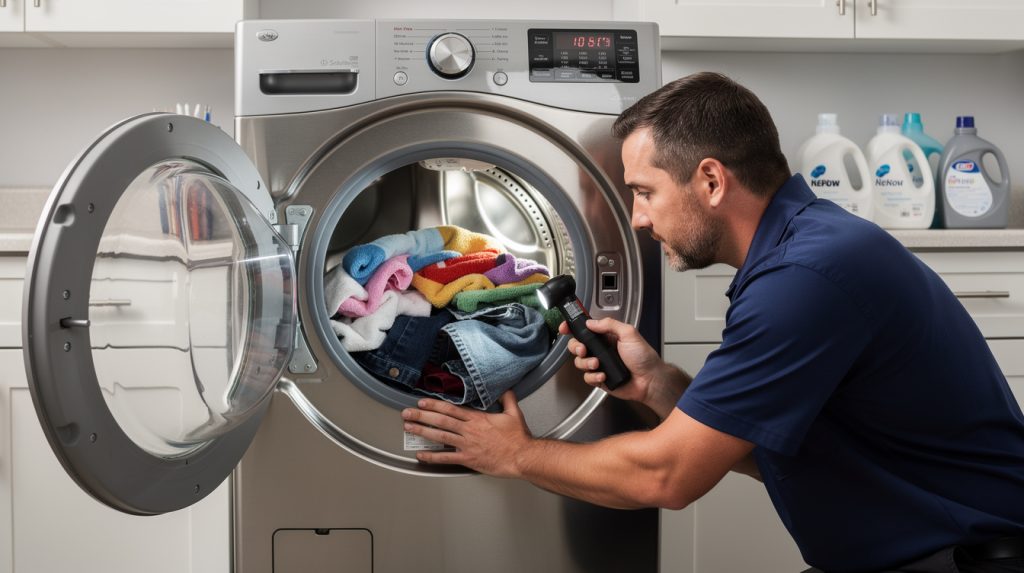
You load your dryer, select a cycle, press start — and hear the motor running but the drum is not turning. Or maybe you hear a humming sound followed by silence. A dryer drum that will not rotate is a frustrating problem, but the good news is that most causes are well-understood and repairable. In many cases, the fix is a relatively inexpensive part replacement rather than a major overhaul.
Let us walk through every common reason a dryer drum stops turning, from the simplest DIY checks to issues that require a professional dryer repair technician.
Understanding How the Drum Turns
Before diagnosing the problem, it helps to understand the mechanics. In most residential dryers, an electric motor spins a drive belt that wraps around the drum. The drum sits on support rollers (usually two or four) that allow it to rotate smoothly. A tensioner pulley (also called an idler pulley) maintains tension on the belt so it grips the drum without slipping. If any one of these components fails — the belt, the motor, the rollers, or the tensioner — the drum stops turning.
Some newer dryers also have a drum bearing at the rear that the drum shaft rotates on. This adds another potential failure point. And the motor itself can fail either electrically or mechanically. Let us examine each component in order of likelihood.
A Broken Drive Belt — The Most Common Cause
The drive belt is the single most common reason a dryer drum stops turning. This thin rubber belt wraps around the entire circumference of the drum, loops around the motor pulley, and passes over the tensioner pulley. Over years of use and thousands of heating and cooling cycles, the belt dries out, cracks, and eventually snaps. When it breaks, the motor runs freely but has no connection to the drum.
You can usually tell if the belt is broken by opening the dryer door and trying to turn the drum by hand. If it spins very freely with almost no resistance (no tension pulling back), the belt has broken. In normal operation, you should feel resistance from the belt tension. Another clue is the sound — if you hear the motor running smoothly but without the usual low-pitched hum of the drum rotating, the belt has likely snapped.
Replacing a dryer belt is one of the more accessible dryer repairs. The part itself costs between $5 and $20, and the procedure involves removing the top panel, lifting the drum, threading the new belt around it, and routing it through the tensioner and motor pulley. For homeowners comfortable with basic appliance disassembly, this can be a DIY project with a model-specific YouTube tutorial. For everyone else, a technician can complete the repair in under an hour.
Worn Drum Rollers
Drum rollers are small wheels — usually made of rubber or nylon — that sit at the front and rear of the drum and support its weight as it rotates. Over time, the rubber on these rollers flattens, develops flat spots, or wears through entirely. When rollers wear out, the drum does not spin smoothly. You may hear a thumping, squealing, or rumbling noise before the drum eventually stops turning altogether.
In some cases, worn rollers increase the friction on the drum to the point where the motor cannot overcome it, and the drum stalls. The motor may hum for a few seconds trying to turn the drum and then shut off on its thermal overload. If your dryer starts and then stops after a few seconds with a humming sound, worn rollers are a likely cause.
Drum rollers should always be replaced as a set — even if only one roller is visibly worn, the others are close behind. The cost of a roller set is typically $15 to $40, and replacing them is moderately involved as it requires removing the drum from the dryer cabinet.
A Failed Tensioner Pulley
The tensioner (or idler) pulley applies spring-loaded tension to the drive belt, keeping it tight against the drum and motor pulley. If the tensioner spring weakens or the pulley bearing seizes, the belt loses tension and slips off. Without proper tension, the belt cannot grip the drum and transfer the motor’s rotational force.
A failing tensioner often announces itself before it fails completely. You may hear a high-pitched squealing or squeaking during operation as the pulley bearing degrades. If you see the belt still intact but hanging loose inside the dryer cabinet, the tensioner has likely failed. Replacing the tensioner is straightforward and is usually done simultaneously with the belt and rollers as part of a preventive maintenance kit.
Motor Failure
If the belt, rollers, and tensioner are all in good condition but the drum still will not turn, the motor itself may have failed. Dryer motors can fail in several ways. The most common is a burned-out winding, which means the motor does not run at all — you press start and hear nothing (or just a click from the start relay). A seized motor bearing produces a humming sound as the motor tries to run but cannot turn. And an intermittent motor may start sometimes but cut out unpredictably.
Before suspecting the motor, check for simpler electrical causes. Make sure the dryer is plugged in securely — electric dryers use a heavy 240-volt plug that can work itself loose. Check your home’s circuit breaker panel for a tripped breaker. Electric dryers typically use a double breaker, and if only one side trips, the motor may receive partial power — enough to hum but not enough to run. Resetting your dryer by unplugging it for a few minutes can clear a temporary motor overload.
If the motor has truly failed, replacement is the standard fix. Motor replacement is a professional-level repair because it involves electrical connections, proper mounting, and belt routing. The motor is also one of the more expensive dryer parts, so your technician may discuss whether repairing or replacing the dryer makes more financial sense based on the machine’s age and condition.
A Broken Drum Bearing
Some dryer models — particularly Maytag, Whirlpool, and some LG models — use a rear drum bearing (also called a drum support bearing or sleeve bearing) that the drum shaft rotates on. When this bearing wears out, friction increases dramatically. You will often hear a loud squealing or grinding noise that has been getting progressively worse over weeks or months. Eventually, the friction becomes too much for the motor, and the drum stops turning.
If your dryer has been making a worsening grinding noise that has now progressed to the drum not turning, the bearing is the prime suspect. Bearing replacement requires removing the drum and often the rear panel, making it a job suited for a technician. It is worth noting that a failing bearing can also damage the drum shaft if left too long, turning a moderate repair into a more expensive one.
The Door Switch
Dryers have a safety switch on the door that prevents the drum from turning when the door is open. If this switch fails in the open position — meaning it thinks the door is always open — the dryer will not start at all. This is more of a “drum will not start” issue than a “drum stopped turning” issue, but it is worth checking because the door switch is a cheap and easy fix.
Close the dryer door firmly and listen for a click. Most door switches make an audible click when they engage. If you do not hear a click, the switch or its striker may be misaligned or broken. Door switches cost $5 to $15 and can be replaced with basic tools.
Thermal Fuse and Overheating Protection
Dryers have a thermal fuse — a one-time-use safety device that blows if the dryer overheats. When the thermal fuse blows, the dryer shuts off completely in most models. However, in some models, a blown thermal fuse only disables the motor while leaving other electrical functions (like the control panel lights and timer) operational. This can create the confusing situation where the dryer appears to be “on” but the drum does not turn.
Thermal fuses blow for a reason, usually restricted airflow from a clogged lint trap or dryer vent. Before replacing the fuse, address the root cause. Clean the lint trap thoroughly, inspect the dryer vent from the back of the machine to the exterior exhaust point, and remove any lint buildup. If your dryer vent feels hot or your dryer takes too long to dry clothes, you likely have a ventilation restriction that caused the thermal fuse to blow. Regular dryer maintenance prevents thermal fuse failures and, more importantly, reduces the risk of dryer fires.
Dryer Drum Maintenance to Prevent Problems
Most drum-related failures are preventable with basic maintenance. Clean the lint trap before every load. Have your dryer vent professionally cleaned once a year. Periodically spin the drum by hand to check for unusual resistance, noise, or wobbling. Listen for changes in the sounds your dryer makes — a new squeak, rumble, or thump is your dryer telling you something is wearing out before it fails completely.
Do not overload the dryer. Overfilling puts excessive stress on the belt, rollers, bearings, and motor. A load that fills the drum about two-thirds full allows clothes to tumble freely, dries faster, and puts less mechanical stress on every component. If you notice your washer showing signs of needing repair, check the dryer too — these appliances often age in parallel since they are typically purchased together.
When to Call for Professional Repair
While a handy homeowner can replace a belt and sometimes tackle rollers with the help of a good guide, most drum-related issues benefit from professional diagnosis. A technician can quickly determine whether the issue is the belt, rollers, bearings, tensioner, or motor — and replace the right parts the first time. For homeowners in Tampa, Wesley Chapel, Lutz, Land O’ Lakes, Zephyrhills, Dade City, Hudson, Shady Hills, and The Villages, a local dryer repair service provides fast turnaround so you are not without a working dryer for long.
Refer to your dryer’s error codes if it displays any — these codes give the technician a head start on diagnosis and can shorten the repair visit. The sooner you address a drum that is not turning, the less likely the problem is to escalate into a more expensive repair.
Related Articles
- Dryer Not Heating? Parts to Check First
- Dryer Squeaking or Making Noise?
- Dryer Takes Too Long to Dry? Here’s Why
- How to Maintain Your Dryer and Prevent Fire Hazards
- Repair vs. Replace: How to Make the Right Call