Dryer Shuts Off Mid-Cycle? 7 Reasons It Keeps Stopping Early
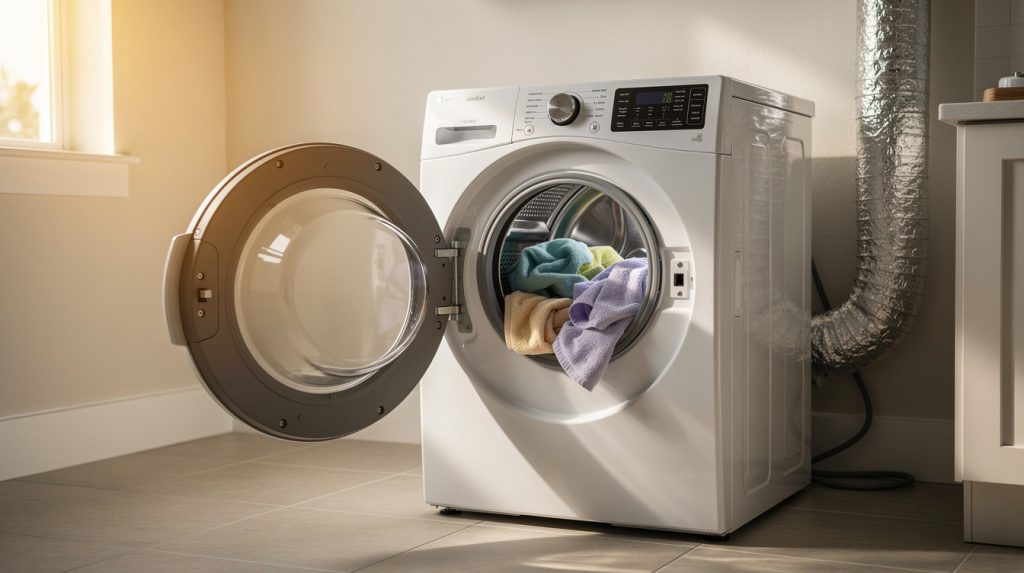
You start a load of towels, walk away, and come back twenty minutes later to a silent dryer and a drum full of damp laundry. The display might be dark, or it might be showing “0:00” as if it finished a job it clearly did not do. You press Start again. Maybe it runs for another ten minutes. Maybe it refuses to do anything until it has had a little rest.
A dryer that shuts off mid-cycle is one of the most common calls we get across Tampa, Wesley Chapel, and Land O’ Lakes, and the good news is that most of the causes are predictable. Even better, the way your dryer stops tells you a lot about why it stopped. Before we get to the seven causes, let’s sort out that one clue, because it can save you an hour of guessing.
One quick note: this article covers electric dryers only. Gas dryers share some of these parts, but anything involving the burner assembly or gas valve needs a licensed gas technician.
First Clue: Does It Restart Right Away, or Does It Need a Timeout?
When a dryer quits early, there are two distinct behaviors, and they point to two different families of problems.
It stops and won’t restart for 15 to 30 minutes
If you press Start and nothing happens, then try again half an hour later and it runs like normal, you’re almost certainly dealing with heat. Something inside got too hot, a protective device opened, and it needed to cool down before it would close again. The usual suspects are the motor’s built-in thermal overload or a high-limit thermostat tripping before the cycle is finished. This is your dryer protecting itself, and the root cause is nearly always airflow or a motor that’s working too hard.
It stops but restarts immediately
If you can press Start and the drum spins right back up with no waiting, heat is less likely to be the villain. Now you’re looking at the door switch, the control board or timer, a moisture sensor deciding the load is “done,” an overloaded drum, or an intermittent power problem. These faults tend to be electrical or mechanical rather than thermal.
Keep that distinction in mind as you read through the list. It won’t diagnose everything, but it tells you where to look first.
1. Overheating: The Cycling Thermostat, High-Limit Thermostat, and Thermal Fuse Chain
Every electric dryer has a chain of heat-sensing parts that keep the heating element from turning your laundry room into a hazard. Understanding the chain makes the rest of the diagnosis much easier.
- Cycling thermostat: Usually mounted on the blower housing. It switches the heating element on and off during a normal cycle to hold the air temperature in range, typically around 135 to 155 degrees depending on the setting. It’s supposed to cycle. That’s its job.
- High-limit thermostat: Mounted on or near the heater housing. It only trips when the element gets far hotter than normal, usually because air isn’t moving. Most reset themselves once they cool, which is why the dryer “comes back” after a timeout.
- Thermal fuse: A one-time safety device on the blower housing or exhaust duct. When it blows, it does not reset. Depending on the model, a blown fuse either kills the heat (dryer runs but stays cold) or kills the motor circuit entirely (dryer goes dead).
A dryer that stops and needs a cooldown is typically living in the middle of that chain: the high-limit thermostat or the motor overload is tripping over and over. A tech will pull the front or back panel, test each device with a multimeter for continuity, and replace whichever one has failed. The parts are inexpensive, often $10 to $30 each, and most shops carry the thermostat-and-fuse kit for common Whirlpool, Maytag, GE, and Samsung models on the truck.
Here’s the part people miss: a failed thermostat or fuse is almost never the whole story. Something caused the overheating. Replace the fuse without fixing the airflow, and you’ll be replacing it again in a month.
2. Restricted Vent: The Number One Reason Florida Dryers Overheat
If we had to bet on a single cause for a dryer that runs hot and shuts off, it would be the vent. Lint builds up in the duct, air can’t escape, heat backs up into the cabinet, and the safety devices start doing their thing. If your dryer takes forever to dry clothes and also stops early, you have your answer before you open the cabinet.
Lint buildup
The lint screen catches maybe three-quarters of what comes off your clothes. The rest travels down the duct and settles wherever the air slows down: elbows, sagging sections, and the exterior hood. Over a couple of years, a four-inch duct can narrow to two inches or less. Our guide on how often to clean your dryer vent in Florida goes into detail, but the short version is at least once a year.
Crushed or kinked foil duct
That shiny accordion-style foil hose behind the dryer is the weak link in most laundry rooms. Push the dryer against the wall and it crushes flat, and every ridge inside it catches lint. Swap it for a semi-rigid aluminum or rigid metal duct. Never use white vinyl; it’s a fire risk.
Long runs through hot Florida attics
This one is specific to how a lot of homes around Wesley Chapel, Lutz, and Land O’ Lakes are built. The laundry room sits in the middle of the house, so the duct runs up into the attic and across 20 or 30 feet before it exits the roof. Every foot and every elbow adds resistance, and a 130-degree attic in August doesn’t help the dryer shed heat. The general rule is a maximum of about 35 feet, minus 5 feet for every 90-degree elbow. Plenty of attic runs blow past that, and a booster fan or rerouted duct is sometimes the only real fix.
Bird nests and pests at the exterior hood
We see this constantly in the older neighborhoods of Zephyrhills and Dade City, and in The Villages where hoods sit at a convenient height for wildlife. Birds love a warm, lint-lined tube, and so do wasps. Walk outside while the dryer runs and feel for airflow at the hood. Weak or no air means a blockage somewhere between the drum and the outdoors. If the top of the dryer or the duct feels too hot to touch comfortably, read our article on why your dryer vent is so hot, because that heat is exactly what’s tripping your thermostats.
3. Moisture Sensor Bars Coated With Residue (Auto-Dry Ends Early)
This cause feels like a shutoff but technically isn’t one. Most dryers built in the last 15 years have two thin metal strips inside the drum, usually on the lint filter housing or the back wall. Wet clothes tumbling across those bars complete a small electrical circuit. As the load dries, the circuit breaks more often, and when the control decides the clothes are dry enough, it ends the cycle.
Dryer sheets and liquid fabric softener leave a waxy film on those bars. Once the film is thick enough, the bars can’t sense moisture at all. The control sees “no conductivity,” concludes the load is dry, and shuts down after five or ten minutes with everything still damp. Florida humidity makes this worse, because loads start out extra wet and need longer than a confused sensor is willing to give them.
The fix costs nothing. Unplug the dryer, find the bars, and scrub them with rubbing alcohol on a cloth. A good test: if a timed-dry cycle runs the full time but auto-dry quits early, the sensor is your problem. If the bars are clean and it still quits, the sensor wiring or the control that reads it may be faulty.
4. Drive Motor Overheating and Thermal Overload
The drive motor turns both the drum belt and the blower wheel, and it has its own built-in thermal overload protector. When the motor draws too much current or runs too hot, that protector opens, the dryer goes silent, and it stays silent until the motor cools. This is the classic “stops and won’t restart for 20 minutes” pattern.
Why would a motor overheat?
- Worn motor bearings. The motor fights friction, pulls more amps, and heats up. You’ll often hear a rumble or squeal before the shutoffs start.
- A drum that’s hard to turn. Failed drum rollers, a seized idler pulley, or a worn rear bearing all load the motor.
- A blower wheel packed with lint. The blower sits on the motor shaft. When it’s clogged, the motor works harder and gets less cooling air.
- A motor that’s simply worn out. After 12 to 15 years, the windings degrade and the motor runs hot even with a free-spinning drum.
Motor replacement is one of the pricier dryer repairs, typically $200 to $400 installed. On a dryer older than about ten years, it’s worth reading our repair vs. replace cost guide first. A motor swap on a five-year-old Whirlpool is a clear yes; on a 16-year-old machine with a rusty drum, maybe not.
5. Worn Door Switch or Latch
The door switch is a small plunger that tells the control the door is closed. Every time the drum tumbles, the whole cabinet vibrates. If the latch is worn, the strike is loose, or the switch has a flaky contact, that vibration can momentarily break the circuit. The dryer thinks you opened the door and stops. Press Start, it runs again, and ten minutes later the same thing happens.
The giveaways: the dryer restarts instantly with no cooldown, shutoffs are more frequent with heavy loads, the door doesn’t click firmly when you close it, and pressing gently on the door while it runs seems to keep it going. A door switch is usually $10 to $25 and takes a tech ten minutes. It’s a small part that causes an outsized amount of frustration, so it’s one of the first things we check when a customer in Hudson or Shady Hills says “it just stops, no rhyme or reason.”
6. Control Board or Timer Problems
On an older mechanical dryer, the timer motor advances a set of cams through the cycle. When the timer motor weakens or a contact wears out, the cycle can stall or jump straight to “off.” On a newer electronic dryer, the main control board does the same job with relays and firmware, and it can fail in stranger ways: random shutoffs, a cycle that ends at the same point every time, or a display that goes dark and comes back.
Boards are especially vulnerable in Florida to two things: humidity creeping into the console over years of laundry-room steam, and voltage spikes during storm season. A nearby lightning strike or a brownout can damage a relay on the board without killing it outright. If your dryer started acting up right after a storm, that’s a strong hint, and our guide on protecting appliances during Florida storm season explains why surge protection matters for dryers too.
Before assuming the board is bad, unplug the dryer for five minutes and try again. Our reset guide for any appliance walks through this. If the dryer flashes an error code when it stops, write it down; many dryers will tell you outright whether the fault is a thermistor, motor, or board. Board replacement usually runs $150 to $350, so it’s a “confirm first” repair, not a guess.
7. Overloaded Drum
This one is on us, not the machine. A drum packed with a king comforter and a load of jeans does three bad things at once. It blocks airflow so heat can’t escape, it loads the motor so it draws more current, and it keeps wet fabric pressed against the sensor bars in a way that confuses the reading. Any one of those can trigger a shutoff. All three together practically guarantee it.
Most manufacturers say to fill the drum no more than about three-quarters full of dry laundry. If you have to push the door closed against the clothes, split the load. Comforters and bath mats should go in alone or with one or two light items to help them tumble.
The Hidden Cause: Power Supply Issues
Electric dryers run on a 240-volt circuit, which is really two 120-volt legs. The motor and controls run on one leg; the heating element needs both. A loose wire at the terminal block, a worn outlet, a corroded cord plug, or an aging breaker can cause the dryer to drop out mid-cycle, especially as the wiring heats up under load.
- The breaker is tripped. That’s a distinct problem with its own causes, including a shorted heating element. See our article on why a dryer keeps tripping the breaker.
- The plug or outlet feels warm or looks discolored. Stop using the dryer and call an electrician. This is a fire risk.
- The display goes dark, then works after you wiggle the cord. That’s a loose connection at the plug or terminal block.
- Shutoffs happen mostly on summer afternoons. Grid voltage in parts of Pasco and Hillsborough counties dips when every air conditioner is running, and a dryer that’s already marginal will drop out.
If your dryer won’t start at all rather than stopping partway, our companion article on troubleshooting a dryer that won’t start covers that side.
DIY or Call a Pro?
Unplug the dryer before touching anything inside the cabinet, or shut off the breaker if it’s hardwired. With that done, these are reasonable things to tackle yourself:
- Cleaning the lint screen, lint chute, and moisture sensor bars.
- Replacing a crushed foil transition duct with a semi-rigid metal one.
- Clearing the exterior vent hood of lint, nests, and debris.
- Reducing load sizes and a five-minute power reset.
- A door switch or thermal fuse, if you’re comfortable with a multimeter and have the right part number.
Things worth calling in help for:
- Any sign of a warm plug, scorched outlet, or breaker that trips repeatedly.
- A thermal fuse that blows again shortly after replacement, which means the airflow problem hasn’t been found.
- Motor, blower wheel, drum roller, or idler replacement. These require removing the drum, and it’s easy to route the belt wrong on reassembly.
- Control board diagnosis. Boards aren’t returnable once installed, so guessing gets expensive.
- Long attic vent runs that need a rotary brush and vacuum, or rerouting.
- Any burning smell, which we cover in what a burning smell from your dryer means. Stop using the dryer until it’s checked.
For most mid-cycle shutoffs, a service visit that includes a vent check, thermostat and fuse testing, and a part replacement lands somewhere in the $150 to $300 range. Motor and board jobs run higher. If you’d rather not spend a Saturday behind the dryer with a flashlight, the team at SkyBreeze Appliance Repair handles this exact problem every week from Tampa up through The Villages, and we carry the common thermostat, fuse, and door switch parts so most jobs are finished in one trip.
Habits That Keep Your Dryer From Quitting Early
- Clean the lint screen every load. Wash it with dish soap every month or two to remove dryer-sheet film.
- Clean the full vent path once a year, and every six months if you have pets, a large household, or a long attic run.
- Check the exterior hood each season to make sure the flap moves freely and nothing has moved in.
- Wipe the moisture sensor bars monthly if you use dryer sheets or liquid softener, or switch to wool dryer balls, which leave no residue.
- Keep loads to three-quarters of the drum and leave a few inches behind the dryer so the duct doesn’t kink.
- Add a whole-home surge protector at the panel to shield the control board in the lightning capital of the country.
- Listen. New squeaks or rumbles are the early warnings of the wear that eventually overheats the motor.
Our full guide on maintaining your dryer and preventing fire hazards covers each of these in more depth.
The Bottom Line
A dryer that shuts off mid-cycle is almost always telling you one of two things: it’s too hot, or a sensor or switch is lying to it. If it needs a cooldown before restarting, start with airflow and the motor. If it restarts instantly, start with the moisture sensor, the door switch, and the control. Either way, clean the vent first. And if the shutoffs come with a burning smell, a hot plug, or a fuse that keeps blowing, don’t keep pressing Start. It’s a lot cheaper to fix a thermostat than to replace a laundry room.
Related Articles
- Why Your Dryer Takes Forever to Dry Clothes (And How to Fix It)
- Why Is My Dryer Vent So Hot? Warning Signs You Shouldn’t Ignore
- How Often Should You Clean Your Dryer Vent? A Florida Homeowner’s Guide
- Dryer Not Heating? 5 Parts to Check Before Calling for Repair
- Why Your Dryer Keeps Tripping the Breaker