Washing Machine Won’t Turn On? 8 Reasons It Has No Power (And What to Do)
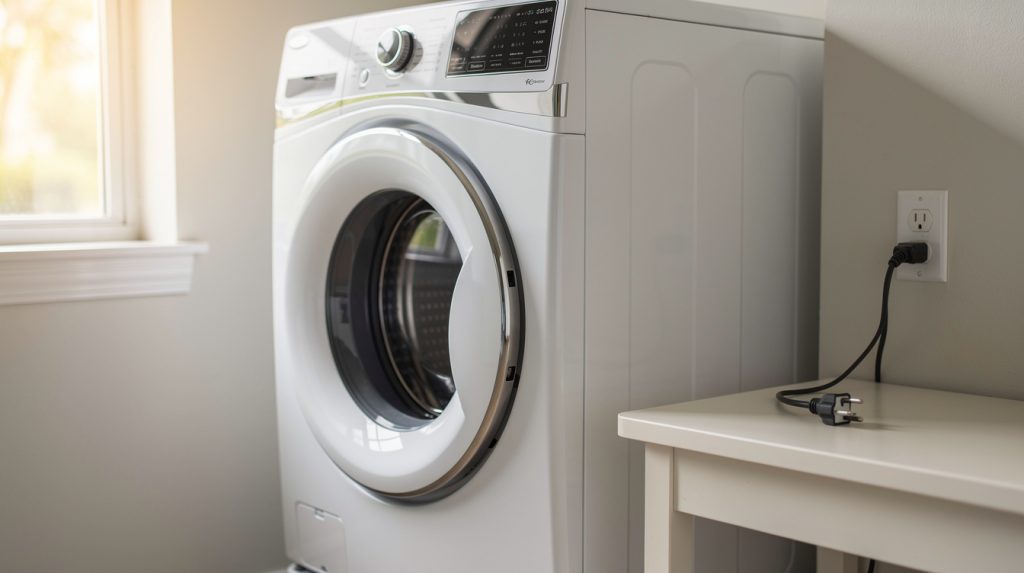
You toss in a load of towels, press Start, and nothing happens. No lights, no beep, no hum. A dead washer is unsettling because it gives you no clues, and the temptation is to assume the worst and start pricing out a replacement.
Here is the good news from someone who sees these calls every week around Tampa and Wesley Chapel: a washing machine that will not turn on is very often a cheap fix, and sometimes it costs nothing at all. Plenty of “dead washer” service calls end with a tripped GFCI outlet or a control lock a grandkid switched on by accident. The trick is to check things in the right order, from the wall outward.
This guide covers the eight most common reasons a washer has no power, what you can safely check yourself, and when to call a technician. It applies to standard electric washers, top-load and front-load. And whenever you go beyond pressing buttons and looking at the outlet, unplug the machine first. Water and electricity share close quarters inside a washer, and no repair is worth a shock.
First, Notice What “Won’t Turn On” Actually Means
Before you chase parts, notice exactly what the washer is doing, because the symptoms point in very different directions.
- Completely dead. No display, no lights, no sound. The machine is not getting electricity at all, or the first component in the power path has failed.
- Lights on, but Start does nothing. The board has power, but something is telling it not to run. Think lid switch, door lock, or a lock mode.
- Display flickers or resets when you press Start. Often a weak connection, a failing cord, or a struggling board.
- Hums or clicks but never starts. Power is arriving, but the motor cannot get going.
1. The Outlet, GFCI, or Breaker Has Cut the Power
This is the number one cause, and the one homeowners most often skip because it feels too obvious.
Check the outlet first
Unplug the washer and plug in something you know works, like a phone charger. If that device is also dead, the problem is upstream of the washer. Also look at the plug itself. A laundry outlet that has seen a decade of vibration is not always as tight as it should be.
Look for a tripped GFCI
Laundry areas in newer homes across Land O’ Lakes and Lutz are wired with GFCI protection, either on the outlet itself (the one with Test and Reset buttons) or on another outlet that feeds the laundry circuit. GFCIs trip when they sense even a small current leak, and aging washers are notorious for nuisance trips, especially in humid garages. Press Reset firmly. If the washer wakes up, you have your answer. If it trips again right away, that is a real fault and a sign to stop and call a pro.
Check the breaker panel
A tripped breaker does not always flip all the way to Off. It often sits in a middle position that looks almost normal. Push it fully to Off, then back to On. If the washer shares a circuit with a dryer or garage freezer, the circuit may simply be overloaded. We covered the dryer version of this in our guide on why a dryer keeps tripping the breaker, and the same logic applies.
One Florida note: after a summer thunderstorm or a brief outage, it is common for a breaker or GFCI to drop out and stay off. If your washer died right after a storm, start here. Our article on protecting appliances during Florida storm season explains why surges hit washers harder than you might expect.
2. A Damaged or Loose Power Cord
Washer cords live a rough life. They get pinched against the wall when the machine walks during spin, they sit in the occasional puddle, and in older homes in Zephyrhills and Dade City they have been unplugged and replugged dozens of times over twenty years.
With the washer unplugged, run your hand along the entire cord and look for cracks, flattened spots, or scorching on the plug. Then check where the cord enters the back of the machine. That strain relief point is where cords most often break internally, and a cord can look fine outside while a conductor inside has snapped. If the washer flickers to life when you wiggle the cord, that is your answer.
A replacement cord runs $15 to $40. On most machines it connects to a terminal block behind the rear panel, and swapping it is a reasonable job for a handy person as long as you photograph the wiring first. If the terminal block looks burned or melted, stop and have a technician look.
3. Lid Switch or Door Lock Failure
If your washer lights up but refuses to start, this is the most likely culprit. Every washer has a safety interlock that prevents it from running with the lid or door open. When that interlock fails, the board thinks the door is open even when it is closed, and it will not start.
Top-load washers: the lid switch
On a top-loader, a small switch sits under the lid rim or near the hinge, triggered by a plastic tab or magnet when the lid closes. Over time the tab breaks, the contacts wear out, or the wiring harness pulls loose. A classic symptom is a washer that fills but will not agitate or spin, though on many newer models a bad lid switch means nothing happens at all.
Look at the lid tab first. If it is cracked or missing, that is a $10 fix. If the tab looks fine, the switch may have failed. A lid switch assembly costs $20 to $60 and is one of the easier washer repairs, though the access route varies by brand.
Front-load washers: the door lock assembly
Front-loaders use an electronic door lock that latches the door and signals the board. When you press Start, you should hear a click as the lock engages. No click, no start. These locks fail more often than lid switches because the solenoid or wax motor inside wears out, and the gasket area stays damp.
Signs of a failing door lock include a door that will not open after a cycle, a blinking lock light, or an error code like dL, dE, or F5 depending on the brand. Our appliance error code cheat sheet lists the common ones. Door lock assemblies run $40 to $120, and replacement means removing the front panel, so it sits on the border between DIY and pro work.
4. Control Lock or Child Lock Is Switched On
This one is almost embarrassing when it turns out to be the problem, but we see it constantly in homes where grandchildren visit. Most modern washers have a control lock (also called child lock or key lock) that disables every button. The display may look normal, may show a small padlock, or may flash briefly and then ignore you.
How you clear it depends on the brand. Common methods include holding the button with a small lock icon beneath it for three seconds, holding two buttons at once, or holding Start until it beeps. No manual? Search your model number and “control lock.”
Some washers also have a Sabbath mode, demo mode, or showroom mode that lights the display but refuses to run a cycle. If someone recently poked around in the settings, that could be why. Our guide on how to reset any appliance covers the reset steps that clear most of these modes.
5. Thermal Fuse or Line Filter Has Blown
Here is where a completely dead washer often ends up. Between the cord and the control board, most washers have a line filter, a small black or silver box that smooths electrical noise before power reaches the electronics. Some machines also have a thermal fuse in the power path that opens permanently if it overheats.
When either fails, the washer is dead in every sense. The outlet tests fine and the cord looks fine, so people assume the control board is shot. In reality, a line filter costs $20 to $50 and a thermal fuse even less.
Testing them requires a multimeter. With the washer unplugged, a tech checks for continuity across the filter’s terminals. No continuity means it is open and needs replacing. Line filters are a common casualty of power surges, which is why we see a cluster of these calls in Hudson and Shady Hills after every big storm cycle. If you are comfortable with a meter, this is a manageable repair. If not, it is a quick diagnosis for a technician.
6. The Control Board or User Interface Has Failed
The main control board is the brain of the washer, and the user interface is the panel of buttons and lights. Either can fail, and both are pricier than the parts above, so rule everything else out first.
Symptoms that point to a board problem:
- Some lights work but others do not, or the display shows partial characters
- Buttons respond intermittently or only when pressed hard
- The washer powers on briefly, then shuts off or reboots when you press Start
- A faint burnt smell from the control panel area
- Error codes that keep returning after a reset
Boards fail from power surges most of all, then heat (a garage that hits 100 degrees on a July afternoon in Tampa), then moisture, which we will get to shortly.
Control boards typically run $150 to $400 for the part, plus labor. Before committing, a technician should verify the board is actually receiving power and that the problem is not a loose harness connector or ribbon cable, which is a much cheaper fix. On a washer more than ten years old, a board replacement is often the moment to weigh repair versus replacement carefully.
7. Timer or Cycle Selector Knob Problems
If you have an older washer with a mechanical timer, the kind where you pull the knob out to start, the timer itself can wear out. Inside is a small motor and a set of cam-driven contacts that route power to different components as the cycle advances. When the contacts wear, the washer may not start, may start only on certain cycles, or may stall partway through.
A quick test: try several different cycles. If it works on one setting but not another, the contacts for the failed setting are worn. Also check whether the knob is actually engaging the shaft. On older machines the plastic knob strips out and spins freely. A new knob is a $10 part.
Full mechanical timers cost $60 to $150 and are getting harder to find for some older models. On newer machines, the equivalent problem is a worn rotary encoder or a stuck Start button, which brings you back to the previous section.
8. Motor Overload or a Seized Motor
This is the one where the washer hums, clicks, or buzzes but never starts. The board is sending power to the motor, but the motor cannot turn. Many washer motors have a built-in thermal overload that shuts the motor down if it gets too hot, and it will not reset until the motor cools, which can take 30 to 60 minutes.
Common reasons a motor overloads:
- An oversized or unbalanced load, especially bath mats and comforters
- A jammed drum from a sock or bra underwire caught between the tub and basket
- Worn motor bearings or a seized transmission on a top-loader
- A failing start capacitor on models that use one
- Back-to-back loads on a hot day with no time to cool
If your washer went dead partway through a big load, unplug it, let it sit for an hour, and try again with an empty drum. If it starts, the overload did its job and you just need smaller loads. If it still hums, see if the drum turns freely by hand. A drum that will not budge points to a jam or a mechanical failure, not an electrical one. We cover related symptoms in our guide on why a washing machine won’t spin, and if the washer starts but quits later, see why a washing machine stops mid-cycle.
The Florida Factor: Moisture in the Control Panel
This deserves its own section because we see it far more in Central Florida than technicians in drier states ever do. A washer’s control panel is not sealed. Behind those buttons is a circuit board with dozens of tiny connections, and it sits in a room that is humid nine months of the year.
Add a few habits and it gets worse. Detergent drips behind the panel. Cleaning sprays seep into button gaps. Washers in garages and covered lanais in The Villages see condensation every time the afternoon storm rolls through. Over a few years, that moisture corrodes ribbon cable connections and eventually causes buttons to stop responding or the whole panel to go dark.
Signs that moisture is your problem:
- Buttons that worked yesterday do not work today, then work again tomorrow
- Fog or droplets under the display plastic
- Greenish or white crusty residue on the board when the panel is opened
- Problems that started after a leak or after the machine was wiped down with a wet cloth
Caught early, a technician can sometimes clean the board with electronics cleaner, dry it, and reseat the connectors. Once corrosion eats through a trace, the board has to be replaced. Either way, if the water came from the machine itself, fix that first or the new board will meet the same fate. Our article on where a washing machine leaks from walks through the usual spots.
DIY or Call a Pro?
Here is a fair split between what most homeowners can handle and what is better left to a technician.
Reasonable to do yourself
- Outlet, GFCI, and breaker checks
- Clearing a control lock or running a five-minute unplug reset
- Replacing a broken lid switch tab or a stripped timer knob
- Replacing a visibly damaged cord, if you are comfortable inside the rear panel with the machine unplugged
- Clearing a jammed drum or waiting out a motor overload
Better to call a technician
- A GFCI or breaker that trips again immediately after reset
- Any burnt smell, scorch marks, or melted plastic around the plug, terminal block, or control panel
- Testing and replacing a line filter, thermal fuse, or door lock assembly
- Diagnosing a control board, since guessing wrong on a $300 part is expensive
- A motor that hums but will not turn even with an empty drum
- Any symptom that appeared after a leak, since you want someone to check for hidden water damage
If you are in Tampa, Wesley Chapel, Lutz, or anywhere nearby and your washer has gone dark, SkyBreeze Appliance Repair can usually pin down the cause on the first visit. Our washing machine repair service covers all the major brands, and we will tell you straight if the fix is not worth it on an older machine.
Cost-wise, lid switches, door locks, line filters, and cords typically land in the $120 to $250 range installed. Control boards run $250 to $500 installed, which is why it pays to rule out everything else first.
Habits That Keep Your Washer Powering On
A few small habits prevent most of the electrical failures above, and none take more than a minute.
- Use an appliance-rated surge protector. A good one costs $20 to $40 and is the cheapest insurance for the control board. During storm season, unplug the washer if you are leaving town.
- Keep liquids away from the control panel. Wipe drips immediately and never spray cleaner directly on the panel. Spray a cloth instead.
- Do not overload. If you cannot fit a hand between the clothes and the top of the drum, it is too much.
- Close the door gently. Slamming a front-loader door wears the lock assembly faster than any other habit.
- Check the cord and plug once a year when you pull the machine out to clean behind it.
- Give the machine some airflow. A washer jammed into a closet in a humid Florida house traps heat and moisture, and that combination is what kills electronics.
For a fuller routine, our complete washing machine maintenance guide covers everything from hoses to drum cleaning, and it will help you spot the early signs a washer needs repair before you end up staring at a dead machine on laundry day.
The bottom line: a washer with no power is rarely a washer that is finished. Start at the wall, work inward, keep the machine unplugged whenever you open anything, and you will either find the fix yourself or know exactly what to tell the technician when you call.
Related Articles
- Washing Machine Won’t Fill With Water? 7 Causes and Fixes
- Why Your Washing Machine Won’t Spin: 6 Common Causes and Quick Fixes
- How to Reset Any Appliance: A Homeowner’s Quick Reference Guide
- Top Signs Your Washing Machine Needs Professional Repair
- When to Repair vs. Replace Your Appliance: A Cost Comparison Guide