Freezer Frost Buildup: 6 Causes and How to Stop It for Good
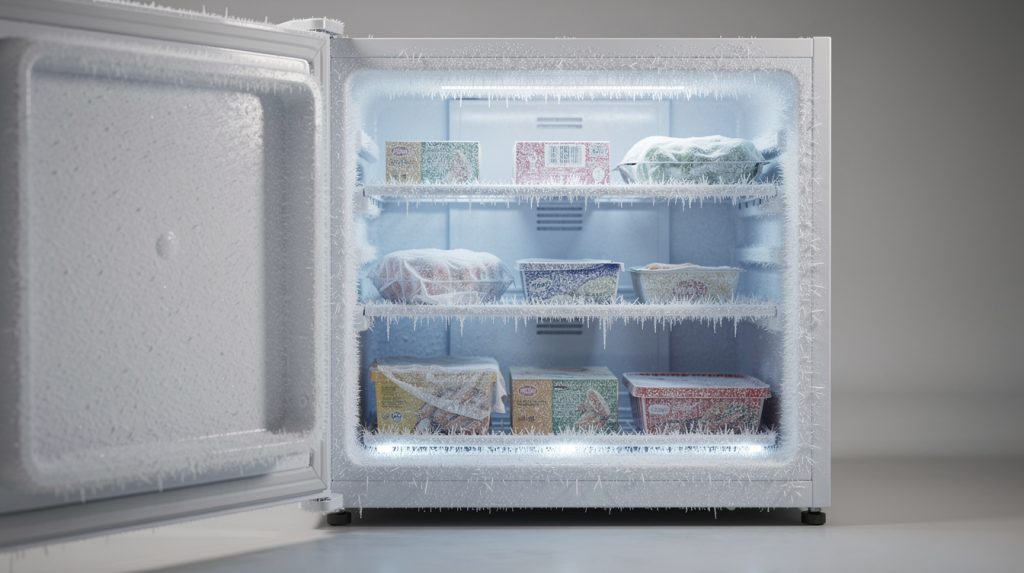
You reach into the freezer for the ice cream and your hand brushes against something that feels like the inside of an igloo. Frost on the walls, frost coating the food bags, maybe a small glacier forming along the back panel. If your freezer is starting to look like a scene from a polar documentary, you’re dealing with one of the most common — and most commonly misunderstood — refrigerator problems in Florida homes.
Here’s the thing about frost: a little of it, in an older manual-defrost freezer, is normal. But modern frost-free freezers should stay essentially frost-free. When they don’t, the frost is a symptom — and the underlying cause is usually one of six things, several of which you can fix yourself this weekend. Left alone, heavy frost buildup makes your freezer work harder, raises your electric bill, steals usable space, and can eventually stop the whole refrigerator from cooling. Let’s melt this problem down to its causes.
Why Frost Forms in the First Place
Frost is just water vapor that froze where you didn’t want it to. Every time humid air gets into your freezer, the moisture in that air condenses on the coldest surfaces and freezes. Your freezer has a defrost system designed to handle small amounts of this — several times a day, a heater briefly warms the evaporator coils to melt accumulating frost, and the water drains away through a small tube.
So heavy frost means one of two things is happening: too much humid air is getting in, or the defrost system isn’t keeping up. In a place like Tampa Bay, where summer dew points live in the 70s, the “humid air getting in” side of that equation is supercharged — Florida freezers frost up faster than freezers almost anywhere else in the country when something’s even slightly wrong.
The 6 Causes of Freezer Frost Buildup
1. A Worn or Leaking Door Gasket
The number one cause, and the first thing to check. The rubber gasket sealing the freezer door doesn’t last forever — it stiffens, cracks, tears, and warps with age. Every gap, even a hairline one, lets humid kitchen air seep in continuously, and that air drops its moisture as frost the moment it hits the cold interior.
Run the dollar bill test around the entire door: close the door on a bill and pull. It should resist everywhere. Pay special attention to corners, where gaskets warp first. Also look for frost concentrated near one edge of the freezer — frost that’s heaviest near the door or one corner usually points straight at a gasket gap in that area. A replacement gasket runs $50–$100 and is a reasonable DIY project on most models: soak the new gasket in warm water to soften it, work it into the channel, and give it a few days to fully seat.
2. The Door Isn’t Closing Fully (Or Is Being Held Open)
Simpler than a bad gasket and even more common: the door isn’t actually closing. A protruding ice cream tub, an overfilled door bin, a twisted bag of frozen vegetables — anything that holds the door open even a quarter inch will frost the freezer over in days, especially in summer. Check too that the refrigerator is slightly tilted back (the front leveling legs a touch higher), which helps doors swing closed on their own rather than drifting open.
If your freezer has an ice maker, peek at the fill area: an ice maker arm or a jam of cubes can hold things ajar, and a frosted-over ice maker brings its own set of problems — we’ve covered those in our guide to fixing an ice maker that’s stopped working.
3. A Failed Defrost Heater, Thermostat, or Timer
If the gasket is good and the door closes tight, the next suspect is the defrost system itself. Three components run the show: the defrost heater (melts the frost), the defrost thermostat (tells the heater when the coils are cold enough to need it), and the defrost timer or control board (schedules the cycles). When any of them fails, frost accumulates on the evaporator coils behind the freezer’s back panel, then spreads.
The signature of a defrost failure: frost concentrated on or behind the back panel, a refrigerator section that’s getting warmer while the freezer stays cold, and a compressor that runs constantly. Eventually the coils ice over completely and cooling fails entirely — if you’re already there, our step-by-step guide on what to do when your freezer stops freezing will help you triage. Diagnosing which defrost component failed requires a multimeter and panel removal, so this one is usually a professional repair — typically $150–$300 depending on the part.
4. A Blocked Defrost Drain
Sometimes the defrost system works fine, but the meltwater can’t escape. The defrost drain — a small channel below the evaporator coils — clogs with debris or refreezes into an ice plug. Meltwater then pools, refreezes into a sheet of ice at the freezer floor, and sometimes leaks out onto your kitchen floor. If you’ve got a skating rink under the bottom basket or mysterious puddles, the drain is your culprit; it’s also one of the causes we detail in our article on why refrigerators leak water.
The fix: unplug the unit, find the drain hole at the back floor of the freezer (under the back panel on many models), and flush it with warm water — a turkey baster works beautifully — until it flows freely into the drain pan below.
5. Warm or Wet Food Going In
Every dish of warm leftovers carries heat and moisture into the freezer, and that moisture becomes frost. The same goes for wet containers, unsealed bags, and that big batch of meal-prep portions loaded in all at once. None of this is a malfunction — but habits can absolutely out-frost a healthy defrost system, particularly if you’re a bulk shopper or meal prepper.
- Cool cooked food in the fridge before transferring it to the freezer
- Use airtight containers and squeeze the air out of freezer bags — it prevents frost inside the packaging too (that’s what freezer burn is)
- Dry off containers before they go in
- Load big hauls in batches rather than all at once, giving the freezer time to recover
6. Temperature Set Too Low
Colder is not better. A freezer set below 0°F doesn’t preserve food meaningfully longer, but it does condense and freeze incoming moisture faster, run longer, and frost up more. Set the freezer to 0°F (-18°C) and the fresh food section to 37°F. If your unit lacks a digital readout, an inexpensive appliance thermometer settles the question.
How to Safely Defrost a Frosted-Over Freezer
Before any fix matters, you need to clear the existing buildup:
- Step 1: Move food to a cooler with ice packs. (In Florida summer, work fast — you have a shorter window than the YouTube videos filmed in Minnesota suggest.)
- Step 2: Unplug the refrigerator and prop the freezer door open. Lay towels around the base.
- Step 3: Let it melt naturally — 4 to 8 hours, or overnight for heavy ice. Bowls of hot water inside speed things up.
- Step 4: Never chip at ice with knives or screwdrivers. One punctured evaporator coil turns a free fix into a sealed-system repair that can total the refrigerator.
- Step 5: Once clear, flush the defrost drain, dry the interior completely, plug back in, and give it 4–6 hours to reach temperature before reloading.
The Cost of Ignoring Frost
Frost is insulation in exactly the wrong place. A quarter inch of it on the evaporator coils measurably cuts cooling efficiency; a heavy buildup can raise the unit’s energy use by 20–30 percent while shrinking usable space and freezer-burning your food. And because the compressor runs longer to compensate, sustained frost problems shorten the appliance’s life. Our appliance lifespan guide makes the broader case, but the short version: frost is the cheapest refrigerator problem to fix and one of the most expensive to ignore.
When to Call In Help
If you’ve replaced or verified the gasket, fixed your loading habits, defrosted fully, and the frost returns within a week or two — the defrost system needs professional testing. SkyBreeze Appliance Repair diagnoses defrost heaters, thermostats, timers, and drain problems across Tampa, Wesley Chapel, Lutz, Land O’ Lakes, Shady Hills, Hudson, Dade City, Zephyrhills, and The Villages, usually in a single visit. We’ll tell you plainly whether it’s a $150 fix or a sign your freezer’s best years are behind it.
A frost-free freezer that’s actually frost-free isn’t a luxury — it’s the design working as intended. A weekend of detective work usually gets you back there.