Garbage Disposal Humming But Not Spinning? Here’s the 10-Minute Fix
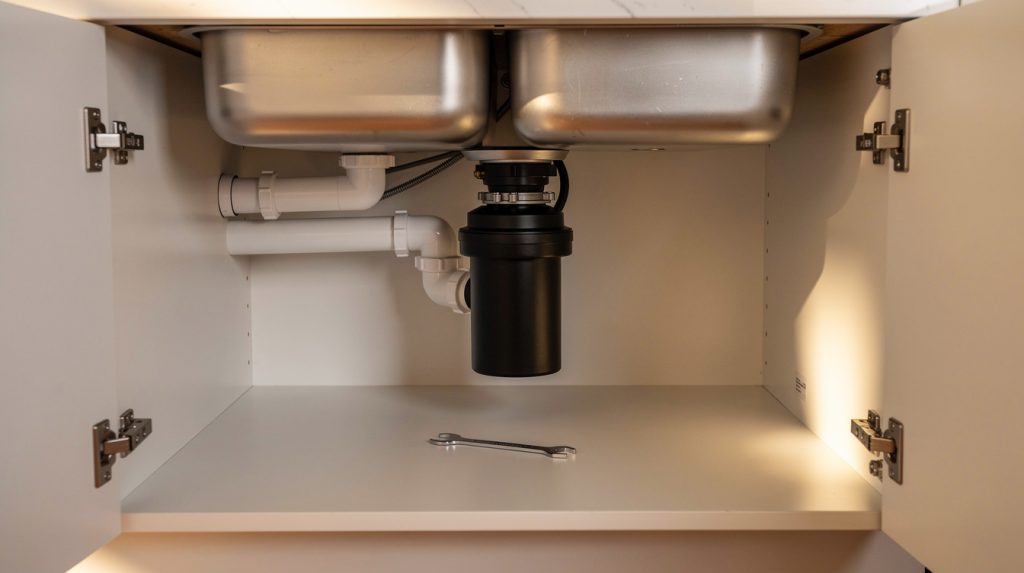
You flip the wall switch and instead of the familiar grind of your garbage disposal, you get… a hum. A low, steady, slightly ominous electrical hum, with a motor that’s clearly getting power but a grinding chamber that’s going nowhere. Maybe it hums for a few seconds and clicks off entirely. Either way, the disposal isn’t disposing, the sink is backing up, and dinner cleanup just hit a wall.
Here’s the good news, and it’s genuinely good: a humming garbage disposal is one of the most fixable appliance problems in your entire house. That hum is actually valuable information — it tells you the motor has power and wants to spin, but something is physically stopping it. In the majority of cases, the fix takes ten minutes and costs nothing. Let’s walk through it safely, because “safely” is the operative word when your hand is anywhere near a disposal.
What the Hum Actually Means
A garbage disposal (or garburator, as our Canadian transplants call it) is a simple machine: an electric motor spins a plate with two swiveling metal lugs (the impellers), which fling food waste against a stationary grind ring. When you hear humming with no grinding, the motor is energized but the plate can’t turn. That means one of three things:
- Something is jammed between the impeller plate and the grind ring — by far the most common cause
- The bearings have seized from age, rust, or long disuse
- The motor’s start mechanism has failed, leaving it powered but unable to begin turning
Important: don’t keep flipping the switch hoping it’ll free itself. A humming disposal is a stalled motor drawing maximum current, and every extra second cooks the windings and trips the overload. Diagnose first, then power it only briefly to test.
Safety First — Non-Negotiable Rules
- Never put your hand into the disposal. Not even “just for a second,” not even when it’s off. Use tools, tongs, or pliers — always.
- Cut the power before working on it. Unplug the disposal under the sink (most plug into an outlet), or flip the breaker if it’s hardwired. The wall switch alone is not enough.
- Keep a flashlight handy. You want to see exactly what’s in the chamber before you go fishing for it.
The Fix, Step by Step
Step 1: Press the Reset Button
Start with the freebie. On the bottom of the disposal unit (look under the sink) there’s a small red or black button — the thermal overload reset. When the motor stalls or overheats, this pops out and cuts power. Press it firmly until it clicks and stays in. If it won’t stay in, give the motor 15 minutes to cool and try again.
If the disposal was humming and then went completely silent earlier, the overload almost certainly tripped — reset it, but don’t test yet. If there’s a jam (and there usually is), it’ll just stall and trip again. Clear the jam first.
Step 2: Free the Impeller Plate with the Hex Wrench
Here’s the trick most homeowners don’t know: nearly every disposal (InSinkErator and most others) has a hexagonal socket in the center of its underside, and it usually shipped with a little L-shaped 1/4-inch hex wrench for exactly this situation. Lost it years ago? A standard 1/4-inch Allen key works fine.
With the power off: insert the wrench into the socket on the bottom of the unit and work it back and forth, rocking with increasing force until the plate breaks free and rotates a full revolution in both directions. You’re manually doing what the motor couldn’t — shearing the jam loose. When the wrench spins freely all the way around, you’ve won.
No hex socket on your model? Use the broom-handle method from above instead: power off, insert a wooden broom handle or dowel into the chamber, brace it against one of the impeller lugs, and lever the plate back and forth until it frees up. Wood only — never metal pry bars, which can crack the grind components.
Step 3: Remove Whatever Caused the Jam
Shine the flashlight into the chamber and extract the culprit with needle-nose pliers or tongs. The usual suspects, in rough order of frequency: fruit pits, bones, fibrous vegetable stringings (celery, corn husks), bottle caps, twist ties, pull tabs, shot glasses (really), flatware, and the occasional ring — check the trap before panicking about that last one. Rotate the plate with your wooden spoon and look again; jams often involve two objects wedged together.
Step 4: Restore Power and Test
Plug it back in (or restore the breaker), press the reset button one more time for luck, run cold water, and flip the switch in a short burst. A healthy disposal spins up instantly with that confident growl. If it grinds normally — congratulations, run cold water for 30 seconds to flush the chamber and you’re done.
Step 5: Still Humming? Here’s the Decision Tree
- Plate turns freely by hand but the motor only hums: the start capacitor or motor windings have failed. On most home disposals, this isn’t economically repairable — see the replacement section below.
- Plate won’t turn even with the wrench: bearings are seized, often from rust after a vacation or in a rarely used disposal. You can try working penetrating oil into the bearing from below and forcing it with the wrench, but a disposal that seizes once tends to seize again. Replacement is usually the smarter money.
- Runs, but trips the reset every time: a partial jam may remain, or the motor is failing under load. Re-inspect the chamber first; if it’s clear, the motor’s on its way out.
Repair or Replace? The Honest Math
Garbage disposals occupy a unique spot in the appliance world: they’re inexpensive enough that major repairs rarely make sense. A quality replacement unit runs $90–$250 (more for premium quiet models), and professional installation typically adds $100–$200. Compare that to motor repair — if you can even find parts — and replacement wins almost every time for a unit over 8 years old.
Worth knowing: the average disposal lasts 8–12 years, and Florida’s hard water doesn’t do the bearings any favors. If yours is humming at age 10, put the repair money toward a new unit with a fresh warranty. Our appliance lifespan guide has the full picture of what to expect from every appliance in the house.
Keep It From Happening Again
Almost every jam traces back to what went down the drain. The disposal-friendly habits that matter:
- Run cold water before, during, and 30 seconds after every grind — it moves waste through and protects the motor
- Feed gradually instead of packing the chamber full and then hitting the switch
- Keep these out entirely: bones, fruit pits, fibrous stalks (celery, corn husks, artichokes), coffee grounds in volume, grease, pasta and rice in bulk, eggshells in quantity, and anything that isn’t food
- Grind ice cubes monthly to knock buildup off the grind components, and follow with citrus peels if you like the fresh smell
- Use it regularly — disposals that sit unused for weeks are the ones that seize
We’ve put together a complete care routine in our garbage disposal maintenance guide, and if your disposal’s problem is different — dead silence, leaking, draining slowly — our general guide to fixing a garbage disposal that’s not working covers the other failure modes.
One More Thing: That Smell After the Fix
A disposal that’s been jammed often develops an odor — trapped food decomposing in a warm chamber does that. After clearing the jam, run a generous stream of cold water, grind a tray of ice cubes with a handful of coarse salt, then follow with lemon or lime peels. Avoid pouring bleach or chemical drain cleaners through a disposal; they’re hard on the seals and don’t fix the underlying cause. If the smell is coming from the dishwasher side of the sink plumbing instead, that’s its own issue — our article on dishwasher odors sorts that out.
When to Call a Pro
If the jam won’t clear, the unit trips its reset repeatedly, water is leaking from the disposal body, or the motor hums even with a free-spinning plate — that’s the point where a professional saves you time and second-guessing. SkyBreeze Appliance Repair repairs and replaces garbage disposals across Tampa, Wesley Chapel, Lutz, Land O’ Lakes, Shady Hills, Hudson, Dade City, Zephyrhills, and The Villages. We’ll diagnose it honestly, and if replacement is the smarter call, we’ll say so and have a new unit grinding the same day.
A humming disposal is your sink asking for ten minutes of your time. Grab the hex wrench, mind the safety rules, and you’ll likely have it growling happily again before the dishwater goes cold.