How Florida’s Hard Water Quietly Destroys Your Appliances (And How to Fight Back)
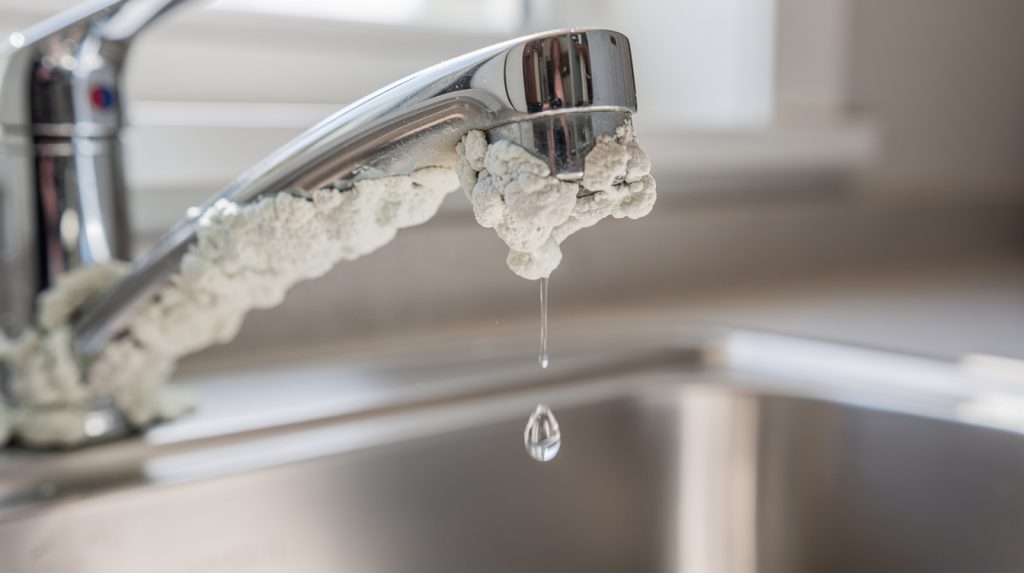
White crust on the dishwasher’s heating element. A kettle that sounds like it’s boiling gravel. Glasses that come out cloudy no matter what you do, a washing machine that eats detergent and gives back dingy towels, and an ice maker that quietly retired two summers early. If you live anywhere in the Tampa Bay area, these aren’t separate mysteries — they’re all the same culprit wearing different disguises. Florida has some of the hardest water in the United States, and it is slowly, patiently working against every water-using appliance in your home.
The good news is that hard water damage is among the most preventable causes of appliance failure — once you understand what it’s doing and where. Let’s look at what’s actually in your water, what it does to each appliance, and the handful of habits that can add years to their lives.
What “Hard Water” Means Here
Florida’s drinking water comes largely from the Floridan Aquifer — rainwater that filtered down through hundreds of feet of limestone, dissolving calcium and magnesium along the way. Water hardness is measured in grains per gallon (gpg): anything over 7 gpg is “hard,” and over 10 is “very hard.” Much of the Tampa Bay region tests in the 12–20+ gpg range, with private wells in Hudson, Shady Hills, Dade City, and parts of Zephyrhills often running even higher. The Villages and surrounding areas sit on the same limestone geology.
When hard water is heated or evaporates, those dissolved minerals come out of solution and stick to surfaces as scale — the same white-gray crust you see on showerheads. Now picture that happening continuously, out of sight, inside every appliance that heats or sprays water. That’s the problem in one sentence: scale loves heat, and your appliances run on heated water.
Appliance by Appliance: What Hard Water Does
Your Dishwasher Takes the Worst of It
No appliance suffers more. The dishwasher heats water to 120–150°F and sprays it through pinhole-sized nozzles — a scale-forming machine by design.
- Spray arm nozzles narrow and clog, weakening the spray until dishes come out dirty — one of the leading causes we cover in why dishwashers stop cleaning properly
- The heating element crusts over, slowing heating and lengthening cycles until the element burns out early
- White film coats your glassware — the signature Tampa Bay complaint, explained fully in our guide to white film on glasses
- Scale builds in the sump, filter, and drain path, contributing to slow draining and odors
- Door gasket surfaces get crusty and seal worse over time, inviting leaks
Your Washing Machine Works Harder and Cleans Worse
Hard water neutralizes a portion of your detergent on contact — the minerals bind with surfactants before they ever touch your clothes. The chain reaction: you add more detergent, the extra detergent and minerals combine into soap scum, and that residue coats the drum, the outer tub, the door gasket, and your laundry itself. Towels turn stiff and gray, the machine develops the musty smell every front-loader owner knows (our washer odor guide deals with that one), and scale quietly accumulates on the heating element and inside the fill valves. Remember those clogged inlet screens that make a washer fill slowly? Hard water built that clog one crystal at a time.
Your Refrigerator’s Water System Is a Slow-Motion Casualty
The thin water line feeding your ice maker and door dispenser is especially vulnerable — scale narrows it gradually, producing smaller, cloudier ice cubes, then hollow cubes, then an ice maker that barely produces at all. Dispenser flow slows to a dribble. The inlet valve’s small orifice scales up the same way. If your ice maker has already gone quiet, our guide to fixing an ice maker walks through the diagnosis — but in this region, mineral buildup is on the suspect list every time. Replace the water filter on schedule (every six months), it’s part of the scale defense too.
Your Garbage Disposal and Drains Feel It Too
Scale roughens the disposal’s grinding chamber and drain lines, giving food residue and grease more to grab onto. It’s rarely the disposal’s cause of death, but it accelerates the buildup that leads to odors and slow drains — one more reason for the monthly ice-and-citrus grind we recommend in our disposal maintenance guide.
Your Oven Gets Off Easy (Mostly)
No water, no scale — the oven is the one major appliance hard water can’t reach. The exception: if you use the steam-clean feature, use distilled water in it, or you’ll bake mineral spots onto the oven floor.
The Warning Signs You’re Already Seeing
- Cloudy glasses and white film that vinegar temporarily improves
- Stiff, scratchy, dingy towels despite more detergent
- Visible white crust on the dishwasher’s heating element or around spray arm holes
- Shrinking, cloudy, or hollow ice cubes; a slowing door dispenser
- Washer or dishwasher cycles that take longer than they used to
- Appliances dying years before the lifespans in our appliance lifespan guide
If you checked three or more boxes, hard water is actively costing you money right now — in energy (scaled heating elements run 10–25% less efficiently), in detergent, and in years of appliance life.
Your Defense Plan: From Free to Whole-House
Tier 1: Free Habits (Start This Week)
- Run a monthly vinegar or citric acid cycle in both the dishwasher (empty, cup of white vinegar upright on the top rack, hottest cycle) and the washing machine (empty, hot cycle, two cups of vinegar or a citric-acid washer cleaner)
- Use rinse aid in the dishwasher, always — it dramatically reduces mineral spotting
- Right-size your detergent: in hard water you need somewhat more than the minimum, but past a point extra detergent just becomes scum. Powder detergents with built-in water softening agents often outperform pods in very hard water
- Wipe gaskets and dispensers dry weekly to stop crust before it starts
Tier 2: Small Money, Big Return
- Clean spray arms quarterly: pull them off, poke each nozzle clear with a toothpick, soak in vinegar
- Descale the dishwasher and washer heating zones with a citric-acid descaler 3–4 times a year
- Replace refrigerator filters on schedule and clean the washer’s inlet screens annually
- Use dishwasher salt if your dishwasher has a built-in softener compartment (many Bosch models do) — most homeowners with these models have never filled it
Tier 3: The Whole-House Fix
A water softener addresses the cause instead of the symptoms. For homes in our service area testing above 10–12 gpg, a softener typically pays for itself over several years through longer appliance life, lower energy use, less detergent, and fewer repair calls. If you’re on a private well in Hudson, Dade City, or Shady Hills, have the water tested first — iron and sulfur need their own treatment stages. We’re appliance people, not water-treatment salespeople, but we’ll say this plainly: the appliances we see in softened-water homes are visibly healthier inside.
Already Scaled Up? What’s Reversible
Plenty, actually. Citric acid descaling restores most clogged spray arms and crusted elements. Inlet screens clean up with vinegar. Cloudy glassware usually recovers after a few cycles with the water and detergent corrected. What’s generally not reversible: heavily scaled fill valves (replacement is usually smarter), narrowed refrigerator water lines (replaceable, modest cost), and heating elements that have burned out under their mineral blanket. When you’re at the “is this appliance worth saving?” stage, our repair vs. replace guide gives you the framework.
The Local Bottom Line
Hard water is part of the deal in Florida, like humidity and June thunderstorms. But its damage isn’t inevitable — it’s just cumulative, which means every month of prevention counts. Put the vinegar cycles on the calendar, keep the rinse aid topped up, and your appliances can live full lives even at 18 grains per gallon.
And when scale gets ahead of you — a dishwasher that won’t clean, an ice maker on strike, a washer that fills at a trickle — the technicians at SkyBreeze Appliance Repair deal with hard water’s handiwork every single day across Tampa, Wesley Chapel, Lutz, Land O’ Lakes, Shady Hills, Hudson, Dade City, Zephyrhills, and The Villages. We know what 15-grain water does to every brand we service, and we’ll get yours running clean again — and tell you exactly how to keep it that way.