Refrigerator Sweating? Why Condensation Forms Inside and Outside (And How to Stop It)
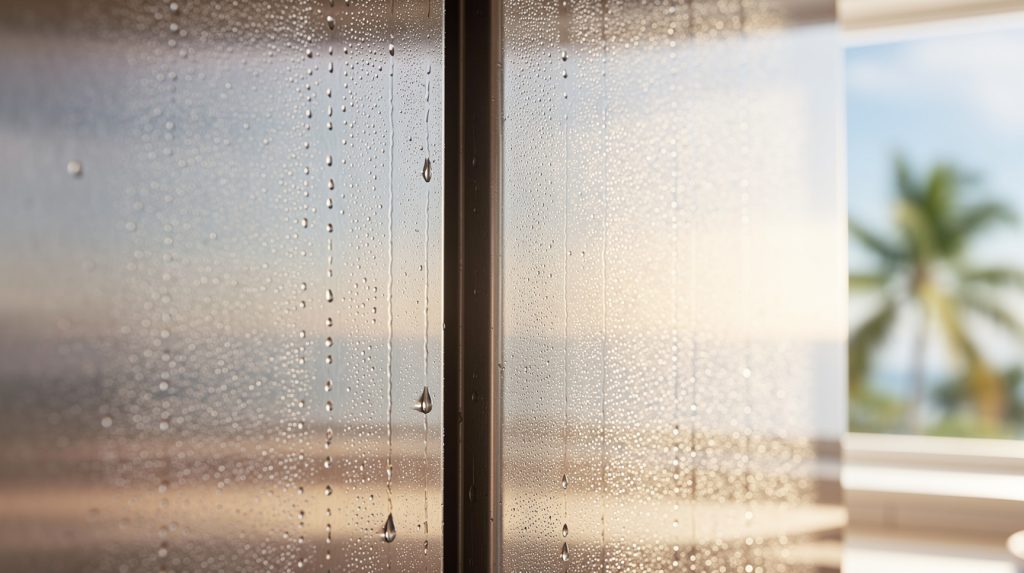
You walk into the kitchen on a muggy September morning and the front of the refrigerator looks like a glass of sweet tea left out on the lanai. Beads of water on the doors. A damp strip down the seam between the fridge and freezer. Or you open the door and find droplets clinging to the ceiling of the fresh food compartment and a soggy crisper drawer.
Both versions are called “refrigerator sweating,” and both are extremely common in Florida homes. Condensation forms whenever humid air touches a surface colder than the air’s dew point, and around Tampa the dew point sits in the low to mid 70s for most of the year. Your fridge interior is 37 degrees, the freezer is near zero, and the doors and cabinet are colder than the room in spots. A cold can of soda sweats on the porch for the same reason.
So a little sweating is normal here. The question is whether your refrigerator is sweating a little because Florida is Florida, or sweating a lot because a part is failing. This guide covers exterior condensation, interior condensation, when droplets cross the line from annoying to damaging, and the fixes that work in our climate. There is also a section for garage refrigerators, because anyone running a second fridge in a Hudson or Shady Hills garage in summer is fighting a battle most appliance manuals never anticipated.
Why the Outside of Your Refrigerator Is Sweating
Exterior condensation shows up on the doors, along the seam between the fridge and freezer doors, around the frame, and sometimes on the cabinet sides. Here are the causes, roughly in order of how often we see them.
Humid Indoor Air on Cold Surfaces
If your home’s AC is running properly, indoor humidity should sit between 45 and 55 percent. At that level a healthy refrigerator stays dry. If humidity creeps up to 60 or 65 percent, the doors can sweat even when nothing is wrong with the fridge.
A cheap hygrometer settles it in seconds. If it reads above 60 percent, the fridge is not your problem. Your AC, a leaky duct, or an open window is.
Garage, Lanai, or Florida Room Placement
Refrigerators in unconditioned spaces sweat constantly in summer. A garage in Land O’ Lakes in August can hit 100 degrees with humidity to match, and a lanai fridge gets the full outdoor dew point. This is not a defect, but it is not harmless either, and we cover what to do about it later.
A Failed or Tired Door Gasket
The rubber door gasket is the number one part-related cause of exterior sweating. When it has a gap, a flattened section, a tear, or has lost its magnetic grip, cold air leaks out around the edge of the door. That chills the door frame and surrounding metal, which then sweats. You will usually see the moisture concentrated along one edge or corner, right where the leak is.
Close the door on a dollar bill and pull it out. If it slides free with no resistance, the gasket is not sealing there. Repeat every few inches around the door. Gaskets run 50 to 120 dollars for the part and are a manageable DIY job on most models. Our guide on why a refrigerator door won’t close or seal covers cleaning, reseating, and replacement.
Mullion Heater or Anti-Sweat Heater Failure
This one surprises a lot of homeowners. Most side-by-side and many top-freezer refrigerators have small electric heaters built into the cabinet behind the center divider (the mullion) and sometimes around the door frame. Their entire job is to keep those surfaces just warm enough that they do not sweat.
When a mullion heater fails, the center strip goes cold and starts collecting water, sometimes enough to drip onto the floor. A tech checks it for continuity with a multimeter. The part is 40 to 90 dollars, but reaching it can mean pulling the divider and part of the door frame, which pushes labor into the 150 to 250 dollar range.
The Energy Saver Switch Is On
Easiest fix on the list. Many refrigerators have an “Energy Saver” or “Exterior Moisture Control” setting. When Energy Saver is on, the anti-sweat heaters are switched off to save a few dollars a year. In Colorado that makes sense. In Wesley Chapel in September, it means your doors sweat. Turn it off, give it a day, and a surprising number of sweating-fridge calls end right there.
Poor or Degraded Insulation
On older units the foam insulation in the walls can settle, crack, or absorb moisture, especially after years in a humid garage. Where it fails, that spot on the outside gets cold and sweats, so you see a patch of condensation on the side or top rather than around the doors. Insulation is not a repairable part. If a 15-year-old refrigerator is sweating through its side panel, that is a clear signal to read our repair versus replace cost guide.
Why Condensation Forms Inside Your Refrigerator
Interior moisture looks different: droplets on the compartment ceiling, under glass shelves, inside the door, or pooled under the crisper drawers.
The Door Was Left Open (Or Opened Constantly)
Every time the door opens, humid kitchen air rushes in and condenses on the cold interior. A family with kids who open the fridge 40 times a day, or a door that did not latch after someone grabbed a juice box, can leave the interior dripping by evening.
Check whether the door closes on its own. A refrigerator should tilt slightly backward so the doors swing shut. If not, raise the front leveling legs a quarter turn or two. If your model has a door alarm, turn it on.
A Leaking Door Gasket
The same gasket that causes exterior sweating also lets humid air seep in. If condensation is concentrated near one edge, do the dollar bill test there. Also check for stiffness. Florida heat hardens the rubber over time, and a stiff gasket does not conform to the frame.
Overloading With Warm or Uncovered Food
A pot of still-warm rice, an uncovered casserole, or a full load of groceries from a hot car all release moisture into the compartment and make the compressor run longer, which deposits that moisture as droplets or frost. Cover everything, let hot food cool on the counter for 20 to 30 minutes, and leave room for air to circulate.
A Blocked Defrost Drain Hole and Drip Pan
This is the interior cause that most often turns into a real repair. Your refrigerator defrosts itself several times a day. The melted frost runs to a small drain hole at the back, through a tube, and into a drip pan on top of the compressor, where compressor heat evaporates it.
When that drain clogs with ice, food particles, or the slimy biofilm Florida humidity encourages, water backs up. It pools under the crisper drawers, freezes into a sheet on the freezer floor, or drips out of the door. Clearing it means unplugging the fridge, locating the drain hole, and flushing it with warm water using a turkey baster. Our article on why a refrigerator leaks water goes deeper on drain lines and cracked drip pans.
The Normal Defrost Cycle
A little moisture right after a defrost cycle is expected. The evaporator warms briefly and some melted frost evaporates into the compartment. If a few droplets on the back wall are gone an hour later, nothing is wrong.
Temperature Set Too Cold
Counterintuitive, but true. When the fresh food section runs below about 35 degrees, more of the humidity inside condenses onto surfaces and food, and you start finding frozen lettuce in the back. The sweet spot is 37 to 38 degrees for the fridge and 0 for the freezer. A thermometer in a glass of water on the middle shelf tells the truth. See what temperature your fridge and freezer should be, and if produce is icing over, why a refrigerator freezes food.
Humidity Control Drawers Set Wrong
Crisper drawers have a slider that opens or closes a small vent. High humidity (vent closed) is for leafy greens; low humidity (vent open) is for fruit like apples and peaches. If both drawers are stuffed with wet produce on the high setting, moisture collects on the lid and drips back onto the food, which is how cilantro turns slimy in three days. Dry produce before storing it and do not overfill the drawers.
When Water Droplets Become a Real Problem
A few beads of condensation are cosmetic. These three situations are not.
Mold and Mildew
Persistent moisture inside a gasket fold, under a crisper, or in the drain channel is the perfect nursery for black mold, and Florida warmth speeds it along. Surface mold on a gasket can be cleaned with a baking soda paste or a mild bleach solution, but once it is embedded in cracked rubber, the gasket needs replacing. If anyone in the house has allergies or asthma, treat this seriously.
Rust and Cabinet Damage
Repeated exterior sweating, especially on a garage fridge, corrodes the door edges, hinge plates, and kick plate. Inside, chronic moisture rusts shelf brackets. We have replaced door hinges on six-year-old garage refrigerators in Hudson because of sweat-driven corrosion.
Electrical Risk
Water dripping down the door face can reach the dispenser and display electronics, and water pooling under the unit reaches the compressor start relay. If you notice a tripped breaker, an erratic dispenser, or a burning smell along with the sweating, unplug the unit and stop using it until a technician has looked at it.
This is the point where professional refrigerator repair is the smart move. SkyBreeze Appliance Repair techs carry gaskets, mullion heaters, and drain kits on the truck, so most sweating-related fixes are done in one visit.
The Fixes, Step by Step
Work through these in order. Most take minutes and cost nothing. Always unplug the refrigerator, or switch off its breaker, before removing any panel, reaching behind the unit, or touching wiring.
- Measure indoor humidity. If it is above 60 percent, address the house first. Run the AC fan on “auto” rather than “on.”
- Turn off Energy Saver or switch Exterior Moisture Control on.
- Test and clean the gasket. Dollar bill test all the way around. Wash with warm soapy water, dry, and rub a thin film of petroleum jelly along the hinge side to restore flexibility. Replace it if torn, stiff, or moldy.
- Check the tilt. Doors should swing closed from a few inches open.
- Verify temperatures. Adjust in small steps and wait 24 hours between changes.
- Clear the drain hole. Flush with warm water, then a tablespoon of baking soda in warm water to slow biofilm regrowth.
- Clean the condenser coils. Dirty coils make the compressor run longer and the cabinet colder in odd spots. See how to clean refrigerator condenser coils. Twice a year in Florida, not once.
- Cover food and cool it first. Simple, but it removes a huge share of interior moisture.
- Test the mullion heater. If the center strip is cold and wet while everything else is dry, and Energy Saver is off, the heater has likely failed. That is a job for a tech.
A Humidity Strategy for Florida Homes
You cannot change the weather, but you can control the air your refrigerator lives in. Keep the fridge away from the dishwasher, the range, and sunny sliding doors, with an inch of clearance on the sides and two to three inches at the back. In many older homes in Zephyrhills and Dade City, the fridge alcove was built for a smaller unit, and a modern French door model ends up wedged in with no airflow at all. That alone causes sweating and shortens compressor life.
If your AC cannot hold indoor humidity under 55 percent, a 35-pint dehumidifier at 150 to 250 dollars makes the whole house more comfortable, not just the fridge. Check the AC filter monthly in summer. Refrigerators are often the first place a household humidity problem shows up.
Storm season adds its own twist. After an outage the unit runs flat out to catch up, which means heavy condensation and frost for a day or two. Our guide to protecting appliances during Florida storm season has a plan for that, and if the fridge never seems to stop afterward, this guide on refrigerators that run constantly will help you sort out whether it is catching up or something failed.
Garage Refrigerators in Hudson and Shady Hills Heat
A second refrigerator in the garage is practically a Pasco County tradition, and every summer it sweats like it is running a marathon. Most residential refrigerators are rated for ambient temperatures up to about 90 or 100 degrees. A closed garage in Hudson in July regularly exceeds that. The compressor runs nearly nonstop, the cabinet stays cold everywhere, and the outdoor dew point turns the whole exterior into a sweating surface. Inside, constant running builds frost fast, and a clogged drain turns the freezer into an ice rink. If that sounds familiar, see freezer frost buildup causes and fixes.
What actually helps:
- Buy a garage-rated model. Some manufacturers sell refrigerators rated for 110-degree ambient with heavier insulation and compressors. Worth the premium.
- Move air. A box fan or ceiling fan aimed at the refrigerator lowers the surface temperature and dries the exterior.
- Insulate the garage door. A foam kit runs 70 to 120 dollars and can drop garage temperatures 10 to 15 degrees on a sunny afternoon.
- Elevate it off the slab. Appliance rollers or a low platform keep the base out of standing water.
- Turn Energy Saver off and leave it off. The anti-sweat heaters were made for exactly this situation.
- Dry it weekly. A quick wipe of the doors and hinges, and a look at the drip pan, adds years to a garage unit.
If a garage refrigerator is over ten years old, sweating heavily, and running constantly, it is likely costing 30 to 50 dollars a month in electricity on top of the corrosion. That math often favors replacement.
DIY or Call a Pro?
Handle it yourself if: the sweating tracks with humid days, Energy Saver was on, the gasket is dirty or slightly stiff but not torn, the door was not closing because of tilt or an overstuffed shelf, food was uncovered, or the drain hole cleared easily. These are free or under 100 dollars in parts.
Call a technician if: the mullion strip is cold and wet while the rest of the fridge is dry, the gasket needs replacing on a French door or built-in model, the drain line is clogged somewhere you cannot reach, water is getting into the dispenser or control panel, you smell burning or the breaker trips, or the refrigerator is sweating and not holding temperature at the same time. That last combination is worth reading about in refrigerator running but not cooling, because a sweating cabinet plus a warm interior usually points to a refrigerant or evaporator problem, not a gasket.
A diagnostic visit in the Tampa area typically runs 80 to 120 dollars and is applied toward the repair. Expect roughly 150 to 300 for a gasket installed, 200 to 350 for a mullion heater, and under 200 for a defrost drain repair. Against a new refrigerator at 1,200 to 3,000 dollars, most of these make clear sense on a unit under ten years old.
Prevention: Habits That Keep the Fridge Dry
A refrigerator that never sweats in Florida is unrealistic. One that only sweats a little on the worst days is achievable.
- Wipe the gaskets with warm soapy water once a month and check for gaps.
- Clean the condenser coils every six months, more often with pets.
- Flush the defrost drain with warm water and baking soda every six months.
- Keep the fridge at 37 to 38 degrees and the freezer at 0, and verify with a thermometer.
- Cover every dish, cool hot food before storing it, and dry produce before it goes in the crisper.
- Keep indoor humidity under 55 percent with your AC or a dehumidifier.
- Leave Energy Saver off from May through October.
- Give the refrigerator breathing room on all sides and make sure the doors swing shut on their own.
If you have worked through this list and the refrigerator is still dripping, or you would rather have someone else pull the rear panel and test the mullion heater, SkyBreeze Appliance Repair serves the whole Tampa Bay area from Lutz up to The Villages, and we see sweating refrigerators every week of the summer. A quick call is often all it takes to tell Florida humidity from a part that needs attention.
Related Articles
- Refrigerator Door Won’t Close or Seal? 8 Causes and Easy Fixes
- Why Is My Refrigerator Leaking Water? Causes and Solutions
- What Temperature Should Your Fridge and Freezer Actually Be?
- Freezer Frost Buildup: 6 Causes and How to Stop It for Good
- How to Clean Refrigerator Condenser Coils (And Why It Matters)